Free demo class

A Level Chemistry Tutor | 1-to-1 Online Chemistry Tuition for Years 12–13

Richmond Tutoring provides 1-to-1 online A-Level Chemistry tutoring for students in Years 12 and 13 across the UK. With our chemistry tutors, your child will develop a deeper understanding of physical, inorganic and organic chemistry, with lessons tailored to their exam board. They will work on calculations, reaction mechanisms, required practicals and exam questions, learning how to apply chemistry, show clear working and tackle unfamiliar problems with confidence. Send us a marked paper and start with a free 45-minute A-Level chemistry lesson, before deciding anything.

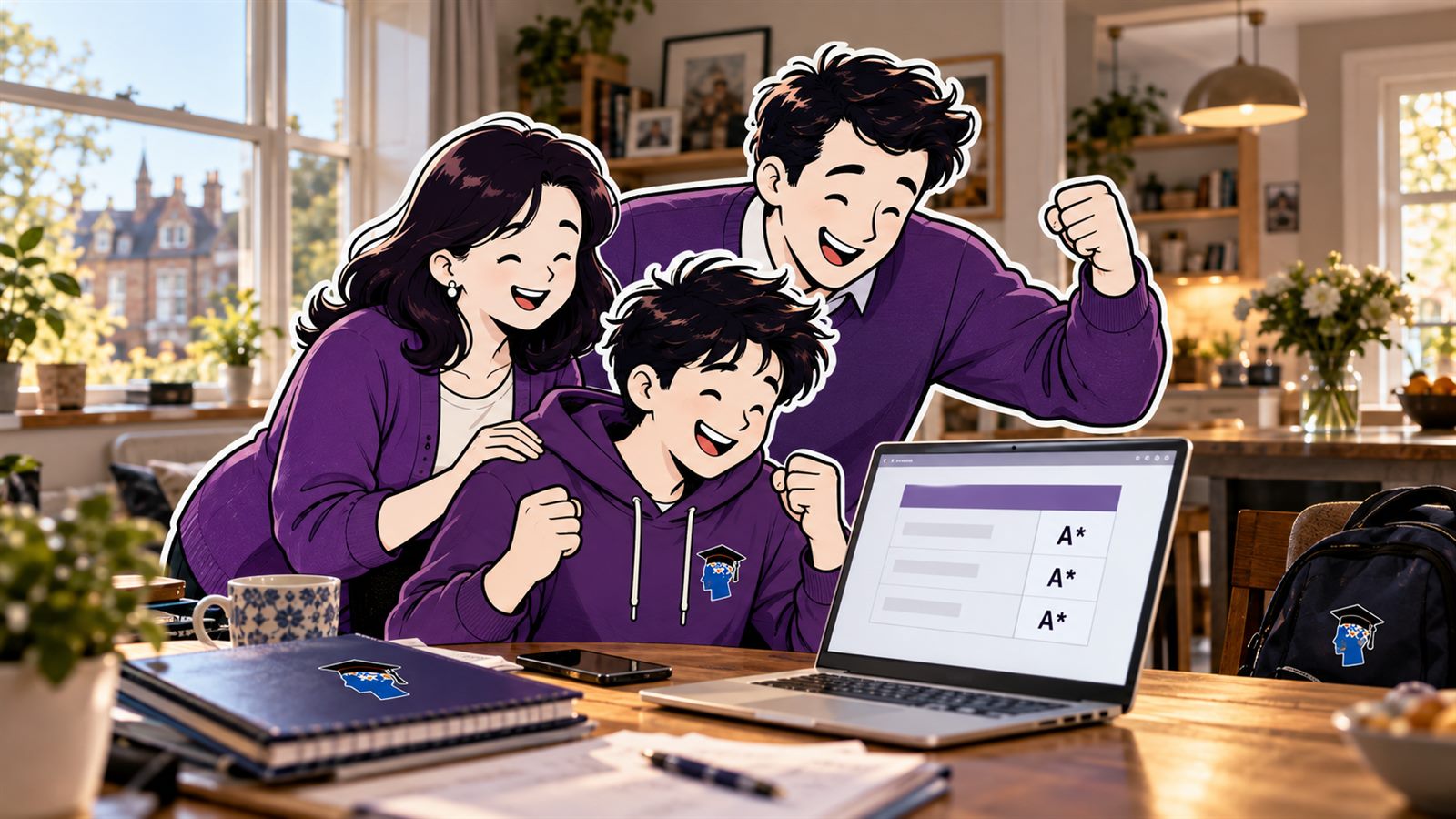
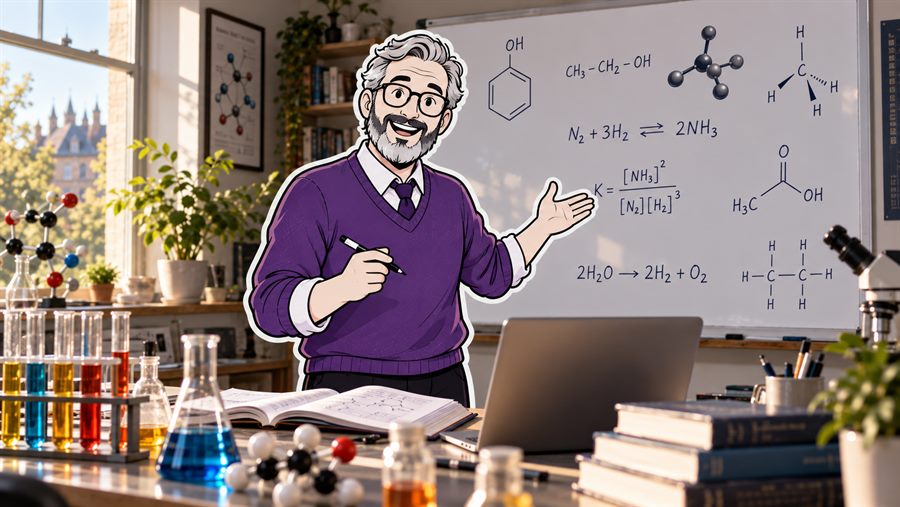
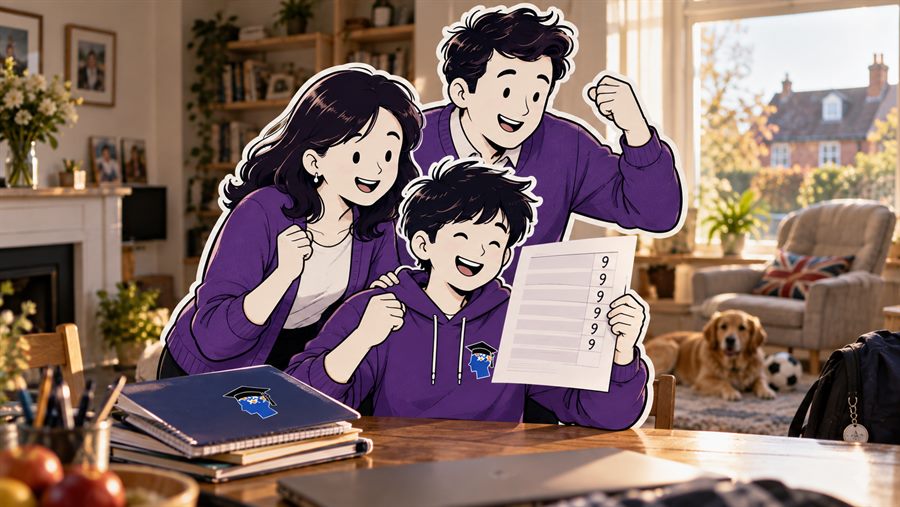
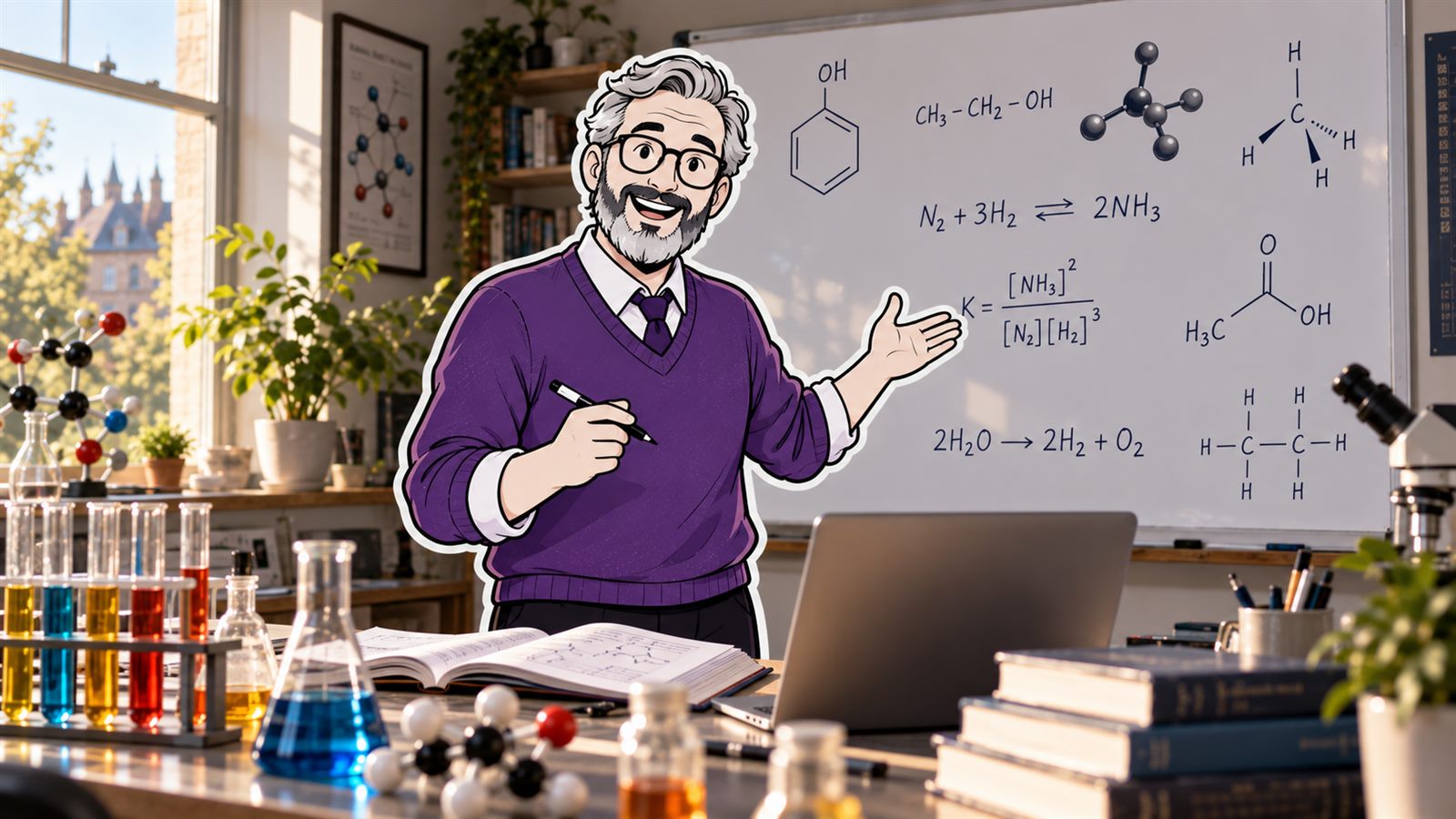
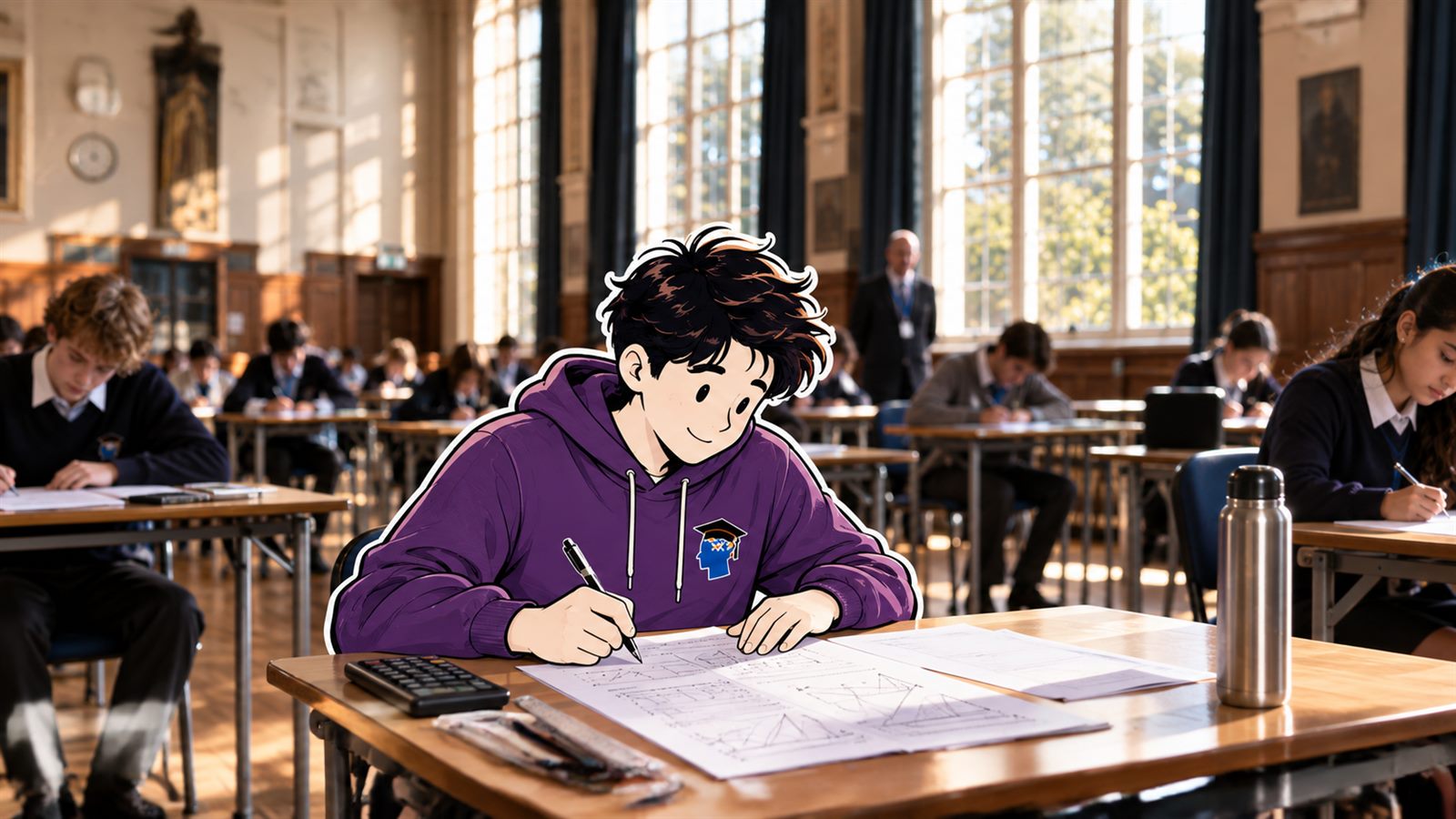
A chemistry tutor at a whiteboard of organic structures and equilibrium equations, with conical flasks and a molecular model on the bench alongside. A sixth-form student sitting an A-Level paper in a school hall, a calculator beside the question paper. A family at the kitchen table celebrating a results page showing top grades.
The short answer

A Level Chemistry Tutoring at a Glance

Richmond Tutoring offers 1-to-1 online A-Level chemistry tutoring for Years 12–13 across the UK, covering Pearson Edexcel, AQA, OCR A and OCR B (Salters).

Subject
A Level Chemistry
Years
Years 12–13
Tuition
1-to-1 online
Students
UK students
Exam boards
Pearson Edexcel, AQA, OCR A, OCR B
Lesson length
60 minutes
Price
£36 per lesson
First lesson
Free 45-minute demo
Why us

Why Parents Choose Richmond for A Level Chemistry Tutoring

Three things we do differently across Year 12 and Year 13.

An A-Level chemistry plan built around your child, not a template

We begin with your child’s exam board, year group and the papers they will sit. Then we find what is actually holding them back — amount of substance, organic mechanisms, or the practical questions — and shape their A-Level chemistry tuition around that. It is never a one-size-fits-all approach.

We Make A-Level Chemistry Click

From bonding and energetics to equilibria, electrochemistry and organic synthesis, we make difficult A-Level chemistry easier to picture and remember. Students learn why the chemistry works, then practise using it in exam questions.

Understanding that shows up on results day

Once the chemistry makes sense, we take it into real questions from your child’s own board: multi-step calculations, mechanisms and synthesis routes, and longer written answers. That is where understanding turns into marks.

When to get help

When Does a Student Need an A-Level Chemistry Tutor?

Most parents do not arrive looking for an A-Level chemistry tutor. They arrive with a sentence about their child. These are the ones we hear most.

He got a 9 in GCSE chemistry and is suddenly on a D.

The GCSE to A-Level jump

The first Year 12 topics — atomic structure, amount of substance, bonding — look familiar, so students revise lightly, and then every question needs one more step than it did at GCSE. We rebuild the method from the early topics, before it costs a predicted grade.

She cannot do the mole calculations.

Amount of substance

Moles run through the whole course: titrations, the ideal gas equation, yields and, later, equilibria and rates. At least 20% of A-Level chemistry marks use maths, so we teach what a mole actually is first, then build every calculation on top of it.

Organic chemistry is just a list of reactions to him.

Organic mechanisms

Organic chemistry looks like hundreds of reactions, but it runs on a handful of mechanisms. We teach what the curly arrows mean, so a student can work out what an unfamiliar molecule will do instead of trying to remember it.

She loses marks on every practical question.

Practicals and data

Every paper asks about practical work: methods, titration results, errors and uncertainties, and the tests for ions and functional groups. We practise them against your board’s own questions, from Year 12.

He took Combined Science, not separate chemistry.

Starting from Combined Science

Combined Science students can start A-Level chemistry with gaps, mostly in quantitative chemistry and organic chemistry. We find them early — ideally over the summer or in the first term — and close them before they build up.

Her predicted grade is below the offer she wants.

Predicted grades and offers

Predictions come from Year 12 work and school mocks, so that is where the effort has to go. We find what is costing the marks and time the work around when the prediction is actually made.

He needs an A* for his medicine offer.

Working to an A or A*

Top grades are won on the synoptic questions, the unfamiliar contexts and accuracy under time, not on the topics a student already finds hard. That is a different plan from catching up, and we build it differently.

Who we teach

A Level Chemistry Tutoring by Exam Board

We teach the four main UK A-Level chemistry specifications: AQA, OCR A, OCR B (Salters) and Pearson Edexcel. Lessons work from your child’s own board’s past papers and mark schemes.

Edexcel A-Level Chemistry Tutor

Edexcel A-Level Chemistry tutoring for specification 9CH0

We provide Edexcel A-Level chemistry tutor online, 1:1, for Year 12 and Year 13 UK students.

What your child is taught

Pearson Edexcel’s specification 9CH0 has two papers of an hour and three quarters, one on inorganic and physical chemistry and one on organic and physical, and a longer third paper, General and Practical Principles in Chemistry, which draws on the whole course and on the 16 core practicals.

This is the UK A-Level, not International A-Level, and the two are not interchangeable. Your Edexcel A-Level chemistry tutor plans around what your child needs, from Edexcel’s own papers and mark schemes.

Where we spend the time

Paper 3 is two and a half hours and 40% of the grade, and it can ask about anything. We rehearse it whole, and keep the core practicals in view from Year 12.

AQA A-Level Chemistry Tutor

AQA A-Level Chemistry tutoring for specification 7405

We provide AQA A-Level chemistry tutor online, 1:1, for Year 12 and Year 13 UK students.

What your child is taught

AQA sets three two-hour papers on specification 7405. Paper 1 covers physical and inorganic chemistry and Paper 2 physical and organic, with the physical chemistry shared between them. Paper 3 can ask about anything: 40 marks on practical techniques and data analysis, 20 marks from across the specification and 30 multiple-choice questions.

What your child needs from that is the first thing we work out. Your AQA A-Level chemistry tutor then builds the lessons around it, from AQA’s own past papers and mark schemes and the 12 required practicals.

Where we spend the time

Paper 3 is the one students underestimate. The multiple choice and the practical section reward practice rather than revision, so we start both early.

OCR A-Level Chemistry Tutor

OCR Chemistry A tutoring for specification H432

We provide OCR A-Level chemistry tutor online, 1:1, for Year 12 and Year 13 UK students on OCR Chemistry A.

What your child is taught

OCR Chemistry A, specification H432, teaches chemistry across six modules. The first two papers each open with 15 marks of multiple choice. The third, Unified chemistry, is shorter and deliberately draws on every module at once.

The first thing worth checking is that your child is on Chemistry A and not Chemistry B (Salters) — the past papers are not interchangeable. After that your OCR A-Level chemistry tutor plans around what your child actually needs.

Where we spend the time

Unified chemistry punishes revising topics one at a time. We practise linking them — energetics in an organic question, equilibria in an industrial process — from Year 12 onwards.

OCR Salters Chemistry Tutor

OCR Chemistry B (Salters) tutoring for specification H433

We provide OCR Salters chemistry tutor online, 1:1, for Year 12 and Year 13 UK students on OCR Chemistry B.

What your child is taught

OCR Chemistry B, Salters (H433), teaches chemistry through storylines — fuels, medicines, the oceans, polymers, colour — and builds the theory from there. Before the Scientific literacy paper, OCR releases an advance notice article, and 20 to 25 marks of that paper are set on it.

The storylines themselves are not examined; questions set the chemistry in contexts students have not seen before. A Salters chemistry tutor works on that careful reading, and on making sure the theory underneath each storyline is secure.

Where we spend the time

The advance notice article is worth real marks. We help your child understand it and practise applying the chemistry in it — without claiming to predict the questions.

Results

A Level Tutoring That Shows Up in the Grades

A*among the A-Level grades our students have earned

Every grade we publish is checked against a results slip first, and we publish the method alongside the numbers rather than the numbers alone.

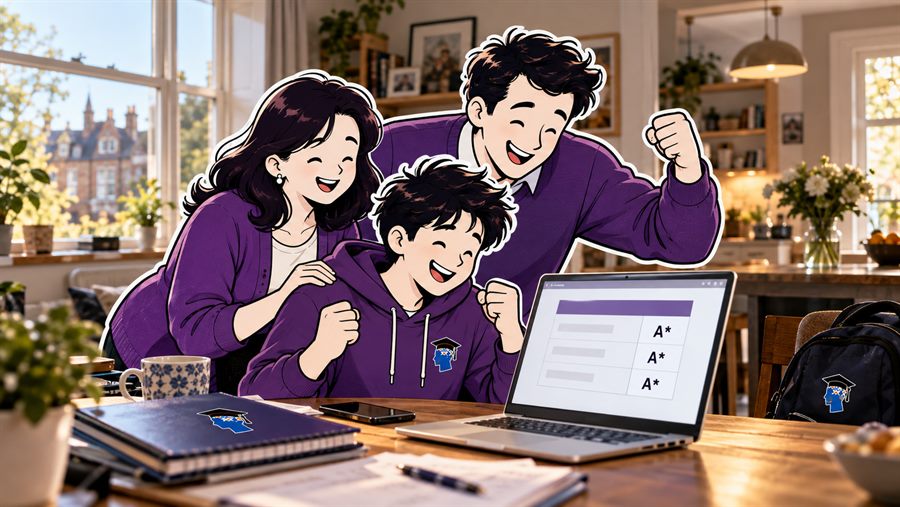
A family at the kitchen table celebrating a results page showing top grades.
Year by year

A Level Chemistry Tutors for Year 12 and Year 13

Year 12 and Year 13 are different jobs. What a tutor works on changes between them.

A Level Chemistry Tutoring for Year 12

Year 12 is where most A-Level chemistry problems begin, usually in the first term. We make amount of substance and bonding secure, build the calculations in from the start, and make the first organic mechanisms reliable, because the rest of the course sits on them.

It also has to keep pace with school, because Year 12 tests and mocks are what most schools set predicted grades from.

  • Amount of substance: moles, titrations and the ideal gas equation
  • Bonding, energetics, kinetics and the first equilibria
  • Organic chemistry: the first mechanisms and reactions

A Level Chemistry Tutoring for Year 13

Year 13 brings the hardest content — acids, bases and pH, electrochemistry, transition metals and organic synthesis — at the same time as UCAS, mocks and an offer grade. All of it, and all of Year 12, can come up in the final papers.

So A-Level chemistry exam preparation is the job: new topics taught alongside school, then timed past papers on your child’s own specification, with the lost marks fed straight into the next lesson.

  • Year 13 topics, taught before they pile up
  • Year 12 topics that were never quite secure
  • Timed past papers, marked and gone through
What the papers test

Chemistry, Maths and Practical Skills

Every A-Level chemistry paper tests three things at once. Sometimes a parent comes to us about one in particular. If that is you, your search ends here.

A-Level Chemistry Topics

Each board organises the content differently, but it is broadly shared. The focus is on:

  • Atomic structure and amount of substance
  • Bonding and structure
  • Energetics and thermodynamics
  • Kinetics and equilibria
  • Acids, bases and pH
  • Redox and electrochemistry
  • The periodic table and transition metals
  • Organic reactions and mechanisms
  • Aromatic and carbonyl chemistry
  • Organic synthesis
  • Analysis: IR, mass spectrometry and NMR

Maths for A-Level Chemistry

At least 20% of the marks need maths, and it goes beyond GCSE. The focus is on:

  • Moles and reacting masses
  • Concentrations and titration calculations
  • Logarithms for pH
  • Equilibrium constants and rate equations
  • Gradients and rates from graphs
  • Significant figures and uncertainties

A-Level Chemistry Practical Skills

Every paper asks about practical work, alongside a separate practical endorsement. The focus is on:

  • Planning an experiment
  • Titrations and recording results
  • Tests for ions and functional groups
  • Percentage uncertainties
  • Evaluating a method
  • Questions on the required practicals
The bigger goal

A Level Chemistry for University Preparation

Many students take A-Level chemistry towards degrees in medicine, dentistry, veterinary science, pharmacy, chemistry and natural sciences. For several of those it is a required subject, and the grade is usually part of the offer.

Many of those courses also expect a Pass in the practical endorsement. If your child already has an offer, send us the requirements and we will build the preparation around them.

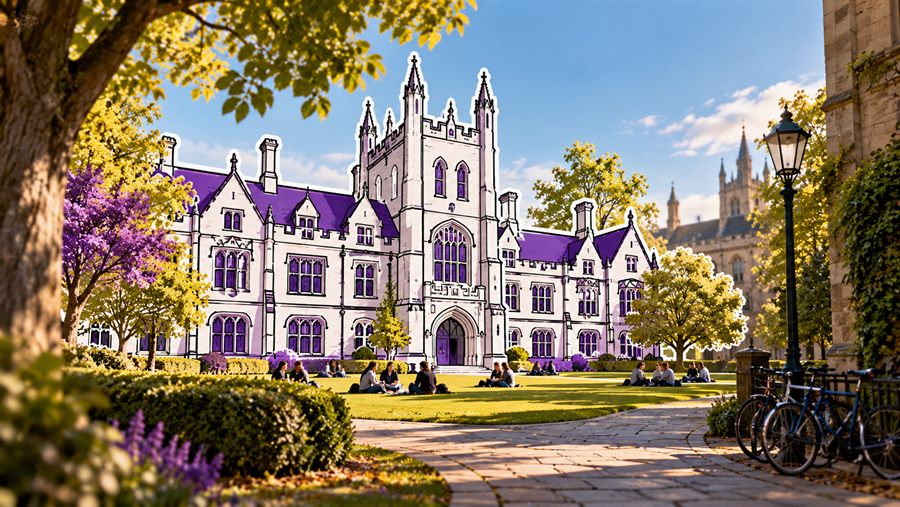
A university campus in spring, its main building behind flowering trees.
Getting started

How to start?

We have kept this deliberately simple: you get to test your A-Level chemistry tutor on a real lesson before you decide anything.

  1. 1
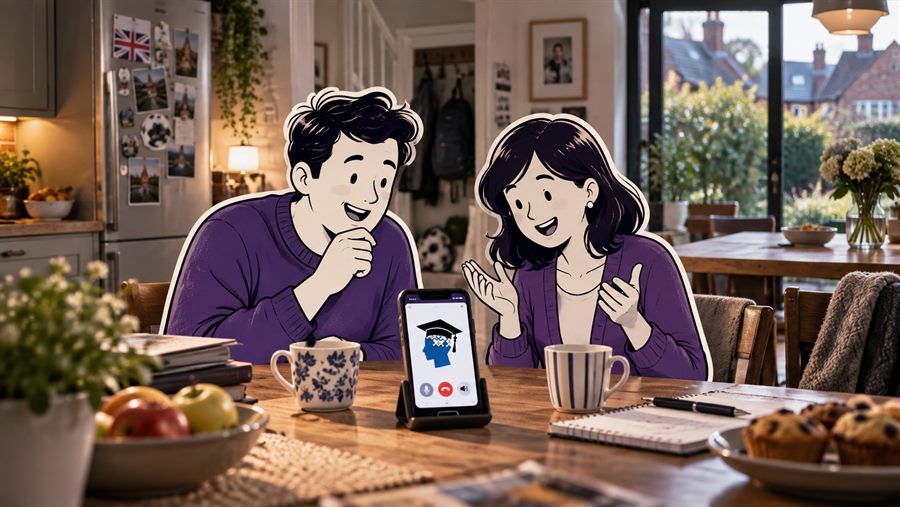
    Two parents at the kitchen table on a video call, a phone propped up in front of them.
    Step one

    Tell us about your child

    Fill in the form or send us a WhatsApp message. We arrange the free demo class and match your child with a specialist A-Level chemistry tutor.

  2. 2
    A chemistry tutor at a whiteboard of organic structures and equilibrium equations, with conical flasks and a molecular model on the bench alongside.
    Step two

    Take the demo class

    Take the free 45-minute lesson, and sit in if you want to. See how the lesson goes, ask us everything you want to ask, and only go ahead with A-Level chemistry lessons if you are convinced.

  3. 3
    A family at the dining table celebrating a results slip covered in top grades.
    Step three

    Lessons begin

    Lessons begin, weekly. Your child starts learning the A-Level chemistry they were stuck on, and that is what turns into marks on the three A-Level chemistry papers.

Cost

What Will A-Level Chemistry Lessons Cost?

At Richmond Tutoring, the price for each 60-minute lesson of chemistry for A-Level is as follows:

£36per hour

  • No contract
  • No placement fee
  • First lesson free
Questions

FAQs

What should parents look for in an A-Level chemistry tutor?

Five things worth checking, whoever you choose:

  • A-Level chemistry teaching experience, not just a chemistry degree
  • Experience of your child’s exam board and its papers
  • Confidence teaching the calculations — moles, pH, equilibria — not only the theory
  • Lessons built on past papers and mark schemes, including practical questions
  • A way of tracking progress you can see between school assessments

Then ask for a trial lesson before you pay for anything. Whether your child will engage with a particular tutor is the one thing no website can tell you.

How much does an A-Level chemistry tutor cost?

Richmond Tutoring charges £36 for a 60-minute 1-to-1 A-Level chemistry lesson — the same as every other subject and level we teach. The first 45-minute lesson is free. There is no package to buy, no placement fee and no minimum term.

Is A-Level chemistry much harder than GCSE?

Yes, for most students it is one of the biggest steps up of any A-Level. The content goes deeper, the calculations take more steps, and organic chemistry moves from naming compounds to explaining how reactions happen. A strong GCSE grade does not guarantee an easy start, which is why the first term of Year 12 is when most families call.

Does my child need A-Level maths to take A-Level chemistry?

Not usually — entry requirements are set by each school or college. At least 20% of A-Level chemistry marks use maths, but it is maths students can learn in context: rearranging, logarithms for pH, and working with equilibrium constants and rate equations. We teach it at the point the chemistry needs it. If the gaps are wider, A-Level maths tutoring can run alongside.

Can my child do A-Level chemistry after Combined Science?

Usually yes, if they meet the school’s entry grades, but they may start with gaps, mostly in quantitative chemistry and organic chemistry. The summer before Year 12, or the first term, is the best time to close them.

Can a tutor help with the practical endorsement?

With the skills behind it, yes: planning, recording and processing data, uncertainties and practical exam questions. The endorsement itself is assessed only by your child’s school, against the CPAC criteria, across at least 12 practical activities, and reported separately as Pass or Not Classified. We never write up or complete practical work.

How can my child learn organic chemistry without memorising everything?

By learning the mechanisms rather than the reactions. Curly arrows show where electrons move, and most of A-Level organic chemistry runs on a handful of mechanism types. Once those make sense, a student can work out what an unfamiliar molecule will do, which is exactly what the harder questions ask for. Synthesis routes then become a map to work through rather than a list to learn.

What is the difference between OCR Chemistry A and OCR Chemistry B (Salters)?

They are two different A-Levels. OCR Chemistry A (H432) is content-led and teaches chemistry module by module. OCR Chemistry B, Salters (H433), is context-led and teaches chemistry through storylines, with an advance notice article sent out before the Scientific literacy paper. Past papers for one do not match the other, so check the code on a mock paper.

Can you help students retaking A-Level chemistry?

Yes. A-Level chemistry is linear, so a student retaking usually sits every paper again, not just the one that went badly. We start from the previous results and feedback, work on the papers and topics that lost the most marks, then move to full timed papers.

Is A-Level chemistry tuition available near me?

Yes. Every lesson is online and 1-to-1, so A-Level chemistry tuition is available wherever you are in the UK — there is no travel and nothing depends on how far you live from us.

Most of the families we teach are in and around south-west London, and we also teach students across the rest of the UK. Places our students come from include Parsons Green, Teddington, Sunbury, Shepherd’s Bush, Hampton, Ashford, Brook Green, Hampton Hill, Chiswick, West Kensington, Hampton Wick, Gunnersbury, Ham, Richmond, Kew Bridge, Petersham, Richmond Hill, Kew, Mortlake, East Twickenham, Grove Park, North Sheen, West Twickenham, Turnham Green, East Sheen, North Twickenham, Stamford Brook, Barnes, Fulwell, Bedford Park, Kingston upon Thames, Heathfield, Acton, Surbiton, Isleworth, South Acton, Hampton Court, Hounslow, Ealing, Tolworth, Hounslow West, Ealing Common, Wimbledon, Osterley, Hammersmith, Twickenham, Brentford, Ravenscourt Park, St Margarets, Syon, Barons Court, Strawberry Hill, Hanworth, Fulham, Whitton, Feltham.
Start with a free A-Level chemistry demo class

A real 45-minute lesson, one to one, with a specialist A-Level chemistry tutor — free, before you decide anything. Tell us the year group and the exam board, and we will tell you honestly whether we can help.

  • No placement fee, no contract, nothing to sign
  • We reply to every enquiry the same day

Ask for the demo class

Five boxes, and we have filled two of them in for you.

We only use your details to answer this enquiry. Privacy · Terms

Thank you — that’s with us.

We’ll be in touch to arrange the demo class, usually the same day. If it’s urgent, ring 07901 286606.

Free 45-minute demo class. Tell us the year group and the exam board.

07901 286606 Book a free demo class