Free demo class

GCSE Biology Tutor | 1-to-1 Online Biology Tuition for Years 10–11

Richmond Tutoring provides 1-to-1 online GCSE Biology tutoring for students in Years 10 and 11 across the UK. Lessons follow your child’s exam board, including Pearson Edexcel, AQA and OCR, at Foundation and Higher tier, and focus on linked written explanation, the required practicals and exam technique. Every lesson is taught by a specialist biology teacher and worked from real past papers. Bring a marked six-mark answer to a free 45-minute lesson and we will show you what it is missing.

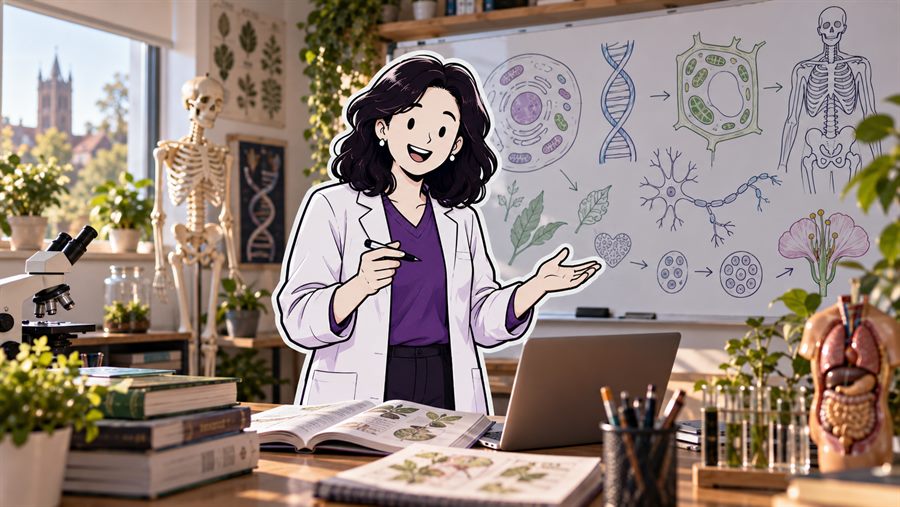
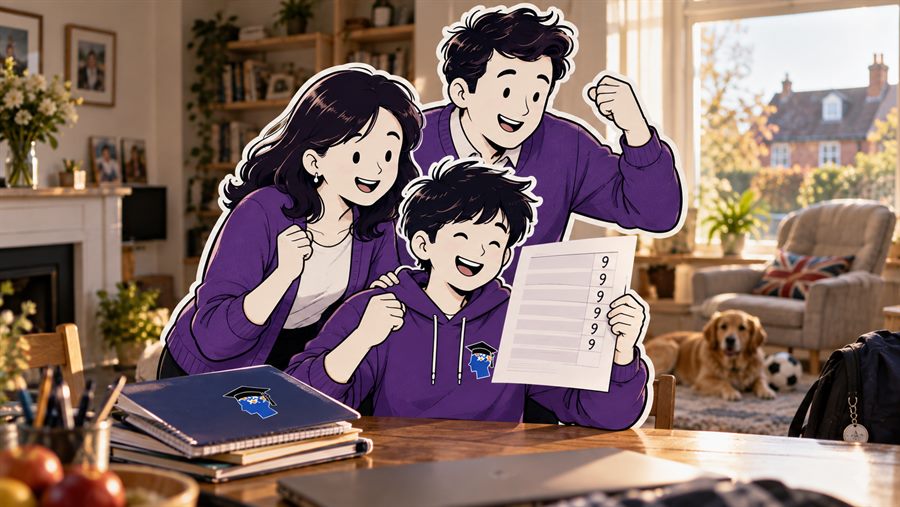
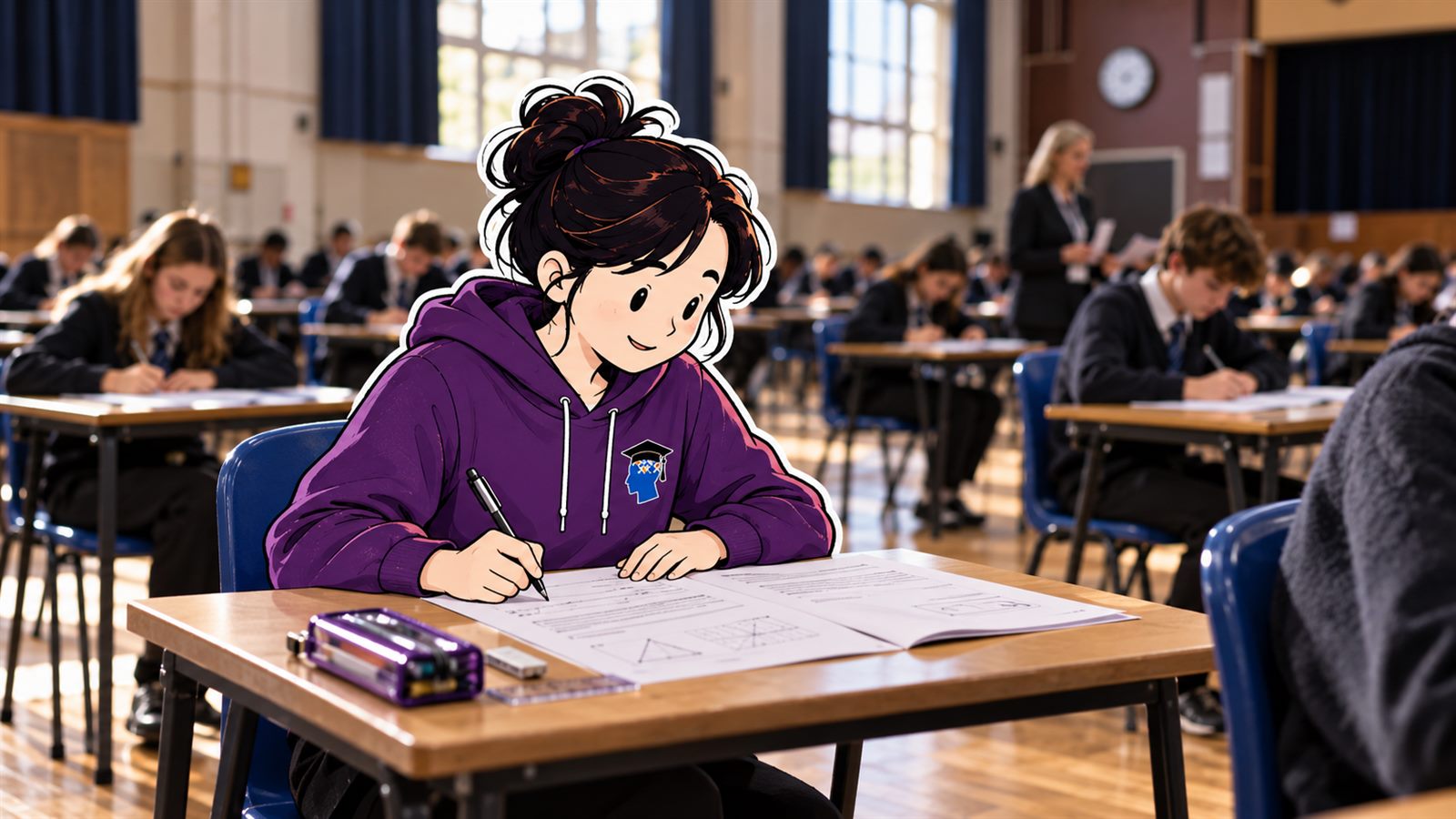
A biology tutor beside a microscope and anatomical models, with a whiteboard of cell and organ diagrams behind. A Year 11 student sitting a biology paper in a school hall. A family at the kitchen table celebrating a results page showing a column of top grades.
The short answer

GCSE Biology Tutoring at a Glance

One-to-one online lessons for GCSE Biology and the biology in Combined Science, on AQA 8461, Edexcel 1BI0 or OCR Gateway J247 at either tier. Two papers of 1 hour 45 minutes, no coursework, and the required practicals examined on paper.

Subject
GCSE Biology
Years
Years 10–11
Tuition
1-to-1 online
Students
UK students
Exam boards
Pearson Edexcel 1BI0, AQA 8461, OCR Gateway J247
Tiers
Foundation & Higher
Lesson length
60 minutes
Price
£36 per lesson
First lesson
Free 45-minute demo
Why us

Why Parents Choose Richmond for GCSE Biology Tutoring

Three habits that move biology marks, whether your child takes Triple Biology or the biology inside Combined Science.

We start from a marked paper

A mock or a recent test shows exactly where the marks went: a whole topic such as inheritance, the six-mark questions, the required practicals or the maths. The first lessons go there, on your child’s board and tier, instead of starting again at cells.

Seven topics, one set of ideas

GCSE Biology keeps returning to the same few ideas: surface area and exchange, enzymes and conditions, feedback and control, variation and selection. Once a student sees those links, homeostasis and ecology stop being separate lists to memorise.

Writing the way examiners mark

We practise the command words (describe, explain, evaluate), the exact terms the mark scheme credits, and how to turn a graph into a conclusion with figures quoted. Every answer is checked against a real mark scheme, so your child sees why a point did or did not score.

Where we come in

What Does a GCSE Biology Tutor Help With?

A GCSE biology tutor helps with the four places marks are usually lost: long answers, revision that does not stick, practical questions and the jump between grade bands. These are the sentences parents bring us.

Her six-mark answers get two or three marks.

Six-mark answers

Usually the facts are right but the chain is broken: a step skipped, or “the enzyme dies” instead of “the active site changes shape, so the substrate no longer fits”. We plan these answers as numbered steps first, then write them out in full.

He revises for hours and it does not go in.

GCSE biology revision that sticks

Biology carries a heavy load of precise vocabulary, and re-reading does not hold it. We move revision onto recall: key terms tested little and often, processes written from memory, and past-paper questions marked as an examiner would.

She did the practical in class but cannot answer questions on it.

Required practicals on paper

Doing the osmosis practical in a lab is not the same as explaining why the potato pieces were blotted dry, or why percentage change in mass is used instead of mass. We take each practical through the questions the exam actually asks.

He is on a 5 and wants a 7 or better.

Moving up a grade band

From a 5, the next marks usually come from data questions: quoting figures from the graph, calculating a percentage change and giving a reason for a pattern. From a 7, they come from unfamiliar contexts, where a question about a new disease or a new species tests ideas your child already knows.

Who we teach

GCSE Biology Tutoring by Exam Board

The three boards teach much the same biology but organise, name and examine it differently. Here is what each one looks like, and where our lessons spend the time.

Edexcel GCSE Biology Tutor

Edexcel GCSE Biology tutoring for specification 1BI0

An Edexcel GCSE biology tutor, online and 1:1, for specification 1BI0 in Years 10 and 11.

What students face

  • Topic 1, Key concepts in biology, is examined on both papers
  • Paper 1: cells and control, genetics, natural selection and genetic modification, and health, disease and medicines
  • Paper 2: plants, animal coordination and homeostasis, exchange and transport, and ecosystems
  • 8 core practicals, from food tests to quadrats and transects
How we teach it
  • Key concepts (enzymes, microscopy, transport) made secure first, since both papers use them
  • Each core practical taken through Edexcel-style questions
  • Six-mark answers against Edexcel mark schemes
  • Timed papers once both halves are taught

AQA GCSE Biology Tutor

AQA GCSE Biology tutoring for specification 8461

An AQA GCSE biology tutor, online and 1:1, for specification 8461 in Years 10 and 11.

What students face

  • Paper 1: cell biology, organisation, infection and response, bioenergetics
  • Paper 2: homeostasis and response, inheritance, variation and evolution, ecology
  • 10 required practicals, three of them in Biology only
  • Multiple choice, short answers and longer open responses on both papers
How we teach it
  • Every required practical: method, variables, results and improvements
  • Paper 1 topics kept warm while Paper 2 is taught in school
  • Open-response answers marked against AQA mark schemes
  • AQA past questions sorted by topic, then whole papers

OCR GCSE Biology Tutor

OCR Gateway GCSE Biology tutoring for specification J247

An OCR Gateway biology tutor, online and 1:1, for specification J247 in Years 10 and 11.

What students face

  • First paper: cell level systems, scaling up, organism level systems
  • Second paper: community level systems, genes, inheritance and selection, global challenges
  • The second paper assumes the first paper’s topics and includes synoptic questions
  • At least eight practicals, in Practical Activity Groups (PAGs)
How we teach it
  • B1–B3 revisited, because the second paper builds on them
  • Questions that mix topics, for the synoptic marks
  • Practical skills (topic B7) taught through exam questions
  • Foundation papers 1 and 2 or Higher papers 3 and 4, as entered
The subject

What Does GCSE Biology Cover?

GCSE Biology covers seven areas, from cell biology to ecology. The split below is AQA’s, with its required practicals; Edexcel and OCR divide the same biology into different topics, so lessons follow your child’s own specification.

Paper 1

  • Cell biology: prokaryotic and eukaryotic cells, cell specialisation, microscopy and magnification, mitosis and the cell cycle, stem cells, and diffusion, osmosis and active transport
  • Organisation: cells to tissues, organs and systems, enzymes and digestion, the heart, blood vessels and blood, health and disease, and plant tissues and transpiration
  • Infection and response: pathogens and communicable disease, human defence systems, vaccination, antibiotics, drug development and monoclonal antibodies
  • Bioenergetics: photosynthesis and limiting factors, the uses of glucose, aerobic and anaerobic respiration, metabolism, and the response to exercise

Paper 2

  • Homeostasis and response: the nervous system and reflexes, the endocrine system, control of blood glucose, the menstrual cycle and contraception, the kidney, and the brain and the eye
  • Inheritance, variation and evolution: DNA and the genome, meiosis, genetic inheritance and Punnett squares, inherited disorders, sex determination, variation and evolution, selective breeding and genetic engineering, and fossils and classification
  • Ecology: adaptations and interdependence, sampling and quadrats, the cycling of materials, decomposition, biodiversity and human impact, trophic levels and food security

AQA required practicals

  • Paper 1: microscopy (1), microbiology and antibiotics (2, Biology only), osmosis (3), food tests (4), pH and amylase (5), light intensity and photosynthesis (6)
  • Paper 2: reaction time (7), plant responses to light or gravity (8, Biology only), sampling with quadrats and transects (9), temperature and the rate of decay (10, Biology only)
Results

How We Publish Results

11GCSE Maths grade 9s since 2024

The number above is a maths figure (2 in 2024, 6 in 2025 and 3 in 2026), and so is our published A-Level A*. Every result we list belongs to a named student and is checked against the slip.

Biology grades will join the results page on exactly those terms once our GCSE Biology students have them. Until then, a free demo lesson shows you how we teach biology.

A family at the kitchen table celebrating a results page showing a column of top grades.
How it works

How Our GCSE Biology Tutoring Works

Three steps, and you meet the tutor in a real lesson before deciding anything.

  1. 1
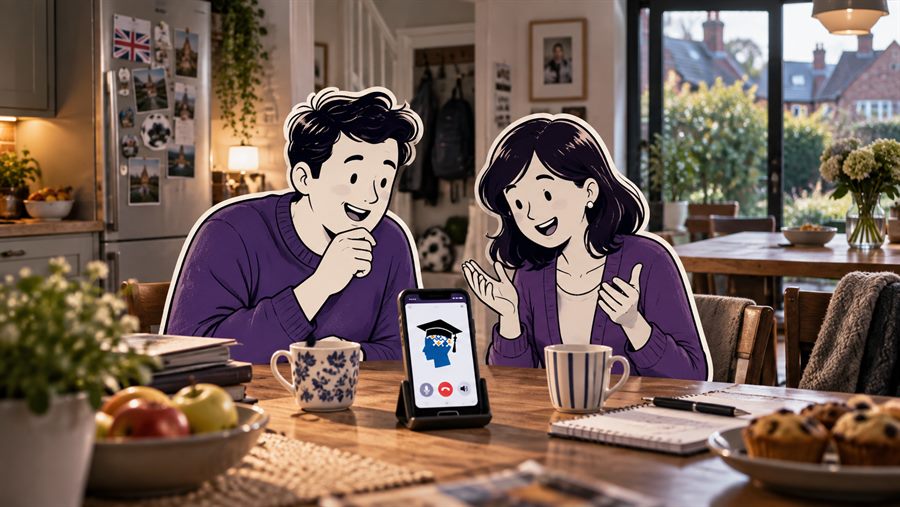
    Two parents at the kitchen table on a video call, a phone propped up in front of them.
    Step one

    Tell us about your child

    Fill in the form or send us a WhatsApp message. We arrange the free demo class and match your child with a specialist GCSE biology tutor.

  2. 2
    A biology tutor beside a microscope and anatomical models, with a whiteboard of cell and organ diagrams behind.
    Step two

    Take the demo class

    Take the free 45-minute lesson, and sit in if you want to. See how the lesson goes, ask us everything you want to ask, and only go ahead with GCSE biology lessons if you are convinced.

  3. 3
    A family at the dining table looking pleased with a school report.
    Step three

    Lessons begin

    Lessons begin, weekly. Your child starts learning the GCSE biology they were stuck on, and that is what turns into marks on both GCSE biology papers.

Cost

What Will GCSE Biology Tutoring Cost?

At Richmond Tutoring, the price for each 60-minute lesson of biology for GCSE is as follows:

£36per hour

  • No contract
  • No placement fee
  • First lesson free

Triple Science biology and the biology inside Combined Science cost the same. So does every other subject we teach.

Questions

FAQs

How much does a GCSE biology tutor cost?

Richmond Tutoring charges £36 for a 60-minute 1-to-1 GCSE Biology lesson. The first 45-minute demo lesson is free, with no placement fee and no contract. That is the same rate as every other subject and level we teach, and you pay lesson by lesson.

What are the AQA GCSE Biology required practicals?

AQA GCSE Biology (8461) has 10 required practicals: (1) microscopy of plant and animal cells, (2) the effect of antiseptics or antibiotics on bacterial growth, (3) osmosis in plant tissue, (4) food tests for carbohydrates, lipids and proteins, (5) the effect of pH on amylase, (6) light intensity and the rate of photosynthesis, (7) a factor affecting human reaction time, (8) light or gravity and the growth of seedlings, (9) sampling a population and the distribution of a species, and (10) temperature and the rate of decay of milk.

Numbers 2, 8 and 10 are in GCSE Biology only, not in Combined Science. Questions on these practicals make up at least 15% of the marks, and they ask about the method, the variables, the results and how to improve the investigation.
What is the best way to do GCSE biology revision?

Short, frequent self-testing on one topic at a time, finished with exam questions. Write out a process such as the stages of the immune response or blood glucose control from memory, check it against the specification, then answer past-paper questions on it and mark them with the real mark scheme. Revise each required practical as a set of exam questions too. Re-reading notes and highlighting feel like work, but very little of it is still there in the exam.

How do students improve on six-mark biology questions?

By answering the question that was asked, in linked steps, using the right terms. Six-mark questions are marked by level, so a long answer that lists correct facts without connecting them stays in the lower levels. A good answer to “explain how the body responds to a rise in blood glucose” runs as a chain: detected by the pancreas, insulin released, glucose taken into cells, stored as glycogen in the liver and muscles, blood glucose falls. We practise them weekly against mark schemes from your child’s own board.

How much maths is in GCSE Biology?

At least 10% of GCSE Biology marks test maths skills, the smallest share of the three sciences. It is mostly data handling: percentages and percentage change, means, ratios, magnification (image size divided by real size), rates from graphs, and reading tables. Students who freeze on these lose easy marks, so we practise them inside biology questions. If the maths underneath is the real problem, GCSE maths tutoring runs at the same rate.

How is GCSE Biology examined?

Two written papers and no coursework. On Pearson Edexcel (1BI0) and AQA (8461) each paper is 1 hour 45 minutes and worth 100 marks; on OCR Gateway (J247) each is 1 hour 45 minutes and worth 90 marks. Practical work is examined inside those papers and is worth at least 15% of the marks.

Can you help a child working at grade 4, 5 or 6?

Yes, and it is the most common place we start. In biology the content is usually known and the marks are going on how it is written down. We work from a marked paper to find which question types are costing marks, then practise those specifically.

Can you help my child aim for a grade 9?

Yes. The top grades are won on precision, on linked multi-step explanation and on the unfamiliar contexts the hardest questions are set in, rather than on covering more content. Lessons move to whole papers under time, with every dropped mark accounted for.

What is the difference between Triple Biology and the biology in Combined Science?

Triple Biology is a full GCSE of its own, with two biology papers. Combined Science teaches the core of the same biology alongside chemistry and physics for a double award, and leaves out some topics and practicals; on AQA, for example, required practicals 2, 8 and 10 are in GCSE Biology only. We teach both at the same rate, and GCSE science tutoring covers Combined Science with one tutor.

Should my child sit Foundation or Higher tier biology?

It depends on the target grade. Foundation runs from grade 1 to grade 5; Higher runs from 4 to 9, with a narrow miss allowed at 3 and a U below that. Higher papers carry content and question types that never appear at Foundation. Schools make the entry decision, usually during Year 11.

Is an online GCSE biology tutor available near me?

Yes. Every lesson is online and 1-to-1, so an online GCSE biology tutor is available wherever you are in the UK — there is no travel and nothing depends on how far you live from us.

Most of our families are in and around Twickenham, Richmond upon Thames and south-west London, including Teddington and Kingston, and we teach students across the UK. Every lesson is online and 1-to-1, so where you live makes no difference.

Book a free 45-minute GCSE biology demo class

A real lesson, one to one, with a specialist GCSE biology tutor — free, before you decide anything. Tell us the exam board and whether it is Triple or Combined Science, and bring a marked mock if you have one.

  • No placement fee, no contract, nothing to sign
  • We reply to every enquiry the same day

Ask for the demo class

Five boxes, and we have filled two of them in for you.

We only use your details to answer this enquiry. Privacy · Terms

Thank you — that’s with us.

We’ll be in touch to arrange the demo class, usually the same day. If it’s urgent, ring 07901 286606.

Free 45-minute demo class. Tell us the year group and the exam board.

07901 286606 Book a free demo class