Guides for parents and students
Straight answers for parents and students — KS3, GCSE and A-Level, exams and revision, from the tutors who teach it every week.
 GCSE · Maths
Best calculator for GCSE Maths: the rules and what to buy
Which calculator is best for GCSE Maths? The JCQ exam rules, which papers allow one, the models we recommend for Foundation, Higher and A-Level, and tips.
 GCSE · Science
Triple science vs Combined Science: which is right for your child?
Triple or Combined Science at GCSE? The difference in GCSEs, content and exam time, whether triple is harder, and what each means for A-Levels.
 KS3 · For parents
GCSE options: a parent's guide to choosing subjects in Year 9
How GCSE options work in Year 9: what's compulsory, how many GCSEs to take, triple or combined science, the end of the EBacc, and what to ask.
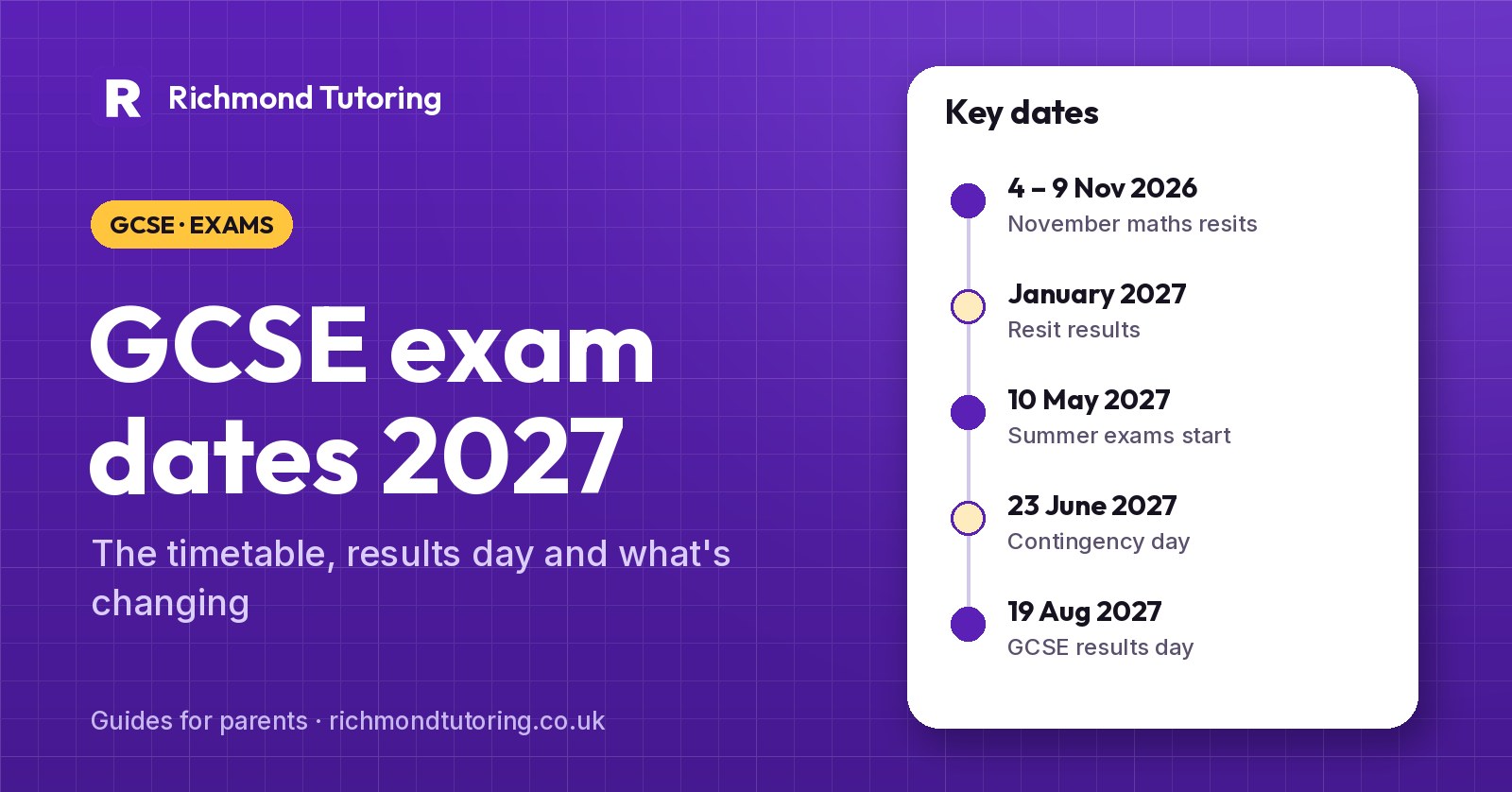 GCSE · Exams & revision
GCSE exam dates 2027: timetable, results day and what's changing
GCSE exams run 10 May to 18 June 2027, results on 19 August. Maths, science, CS and English dates, plus what the curriculum review changes for Years 7–11.
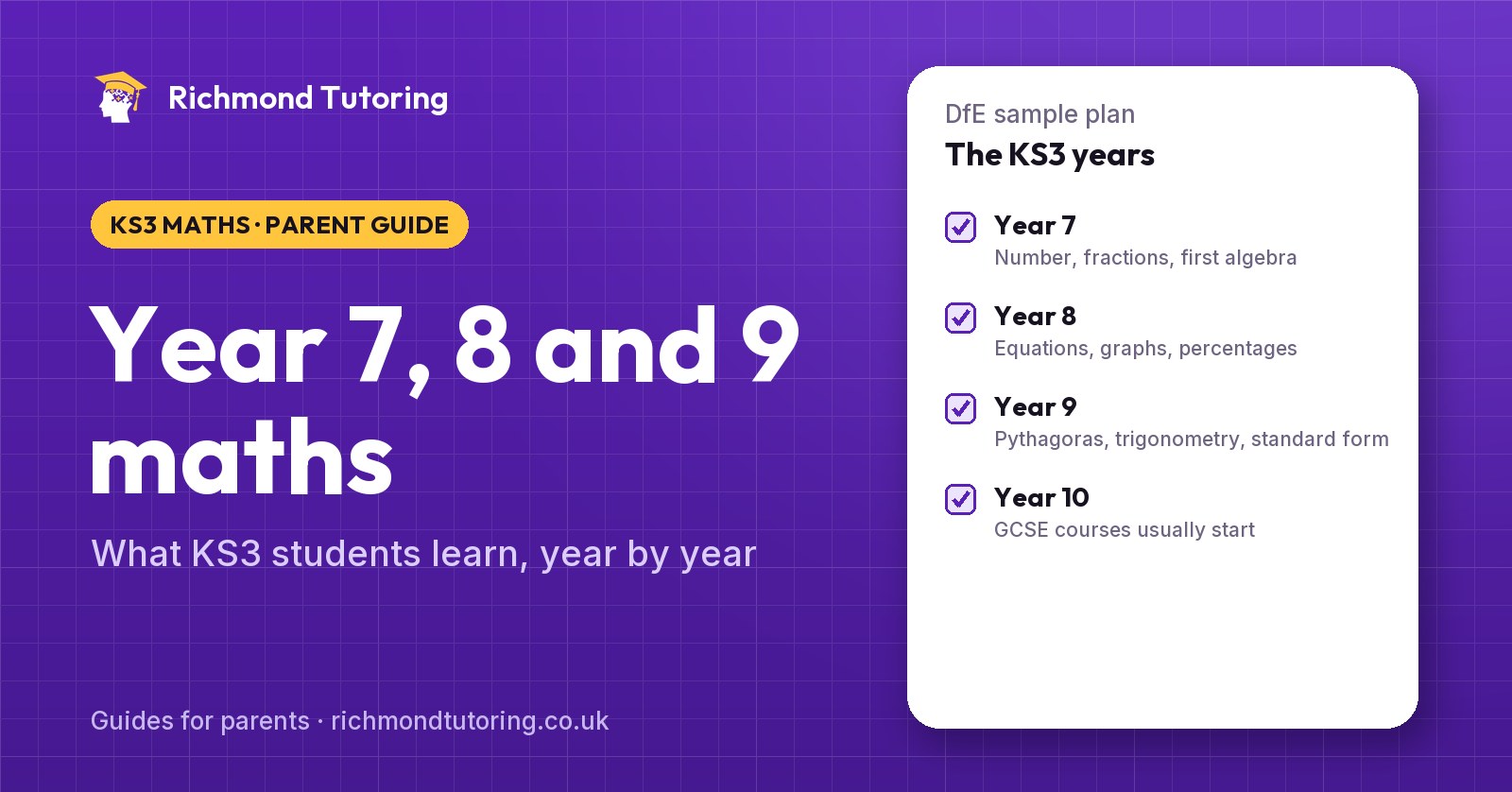 KS3 · Maths
What do children learn in Year 7, 8 and 9 maths? The KS3 maths curriculum
The KS3 maths curriculum year by year: what children learn in Year 7, Year 8 and Year 9 maths, how tests and sets work, and the topics to secure before GCSE.
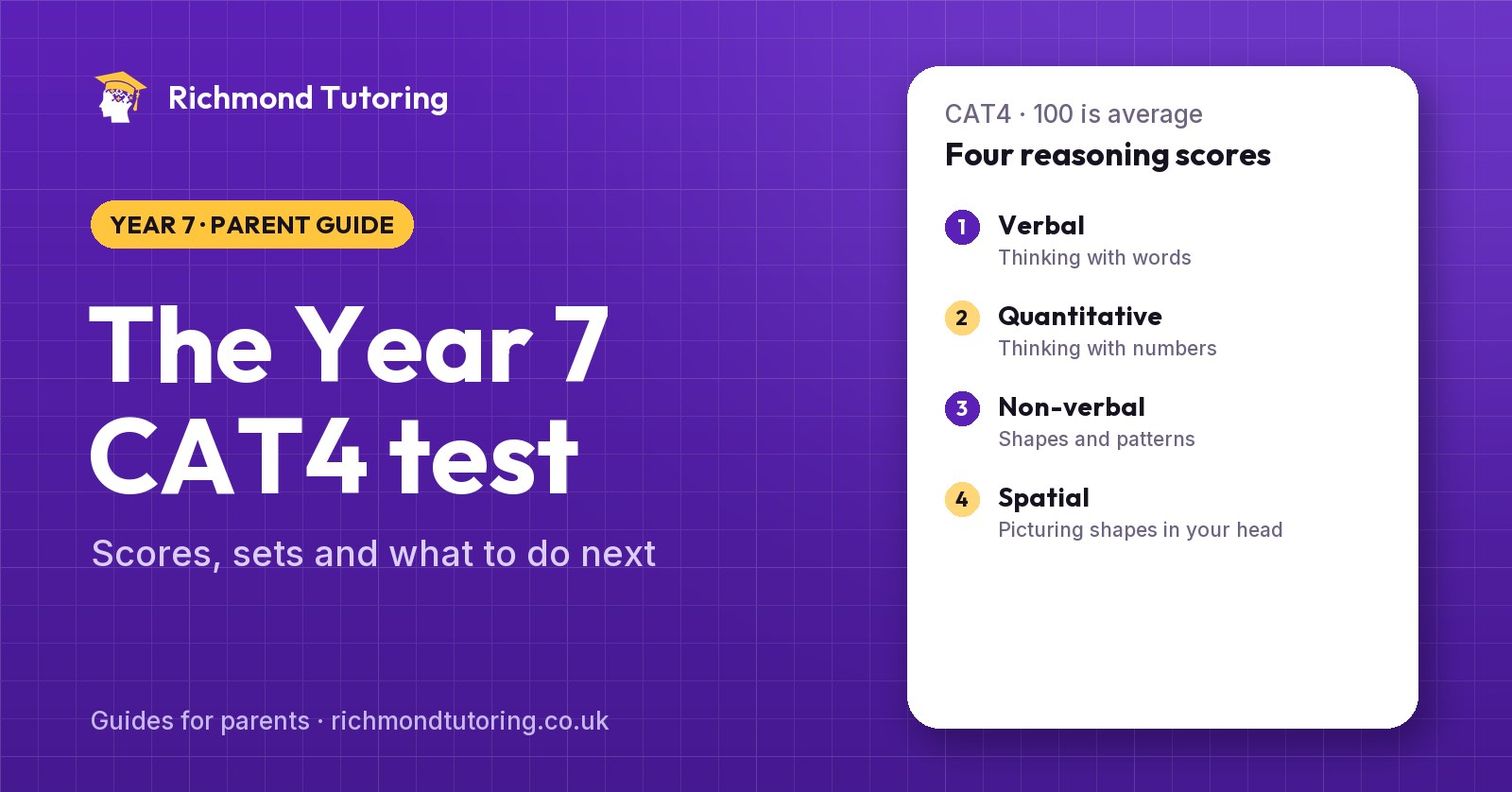 KS3 · For parents
Year 7 CAT4 test: what the scores mean for your child (and their maths set)
What the Year 7 CAT4 test measures, how to read the scores (SAS, stanines, percentiles), how schools use them for maths sets, and what to do next.
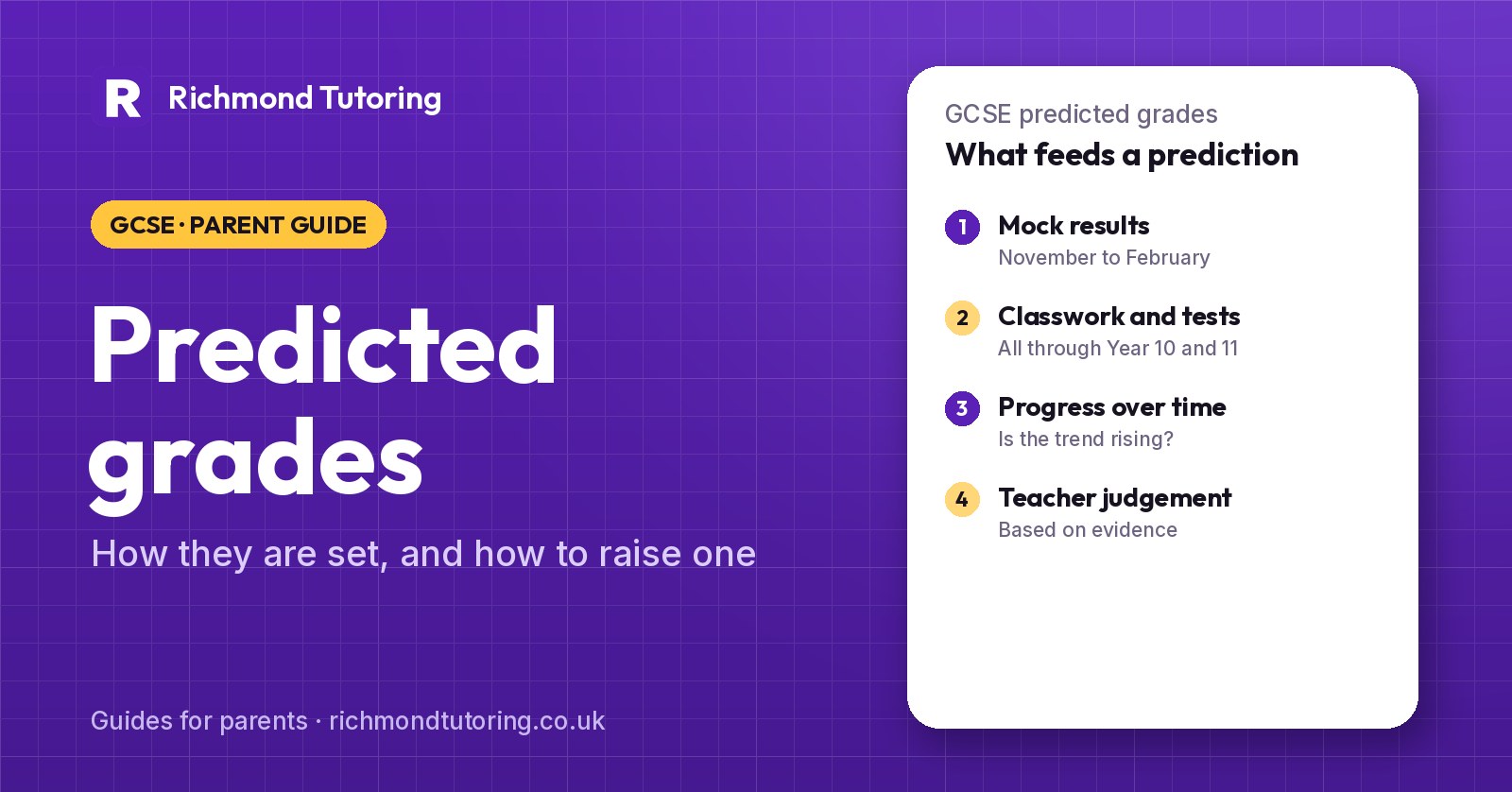 GCSE · For parents
GCSE predicted grades: how they're worked out and can they change?
How schools set GCSE predicted grades, what they're used for, whether they can change, what to do if you disagree and how your child can raise one.
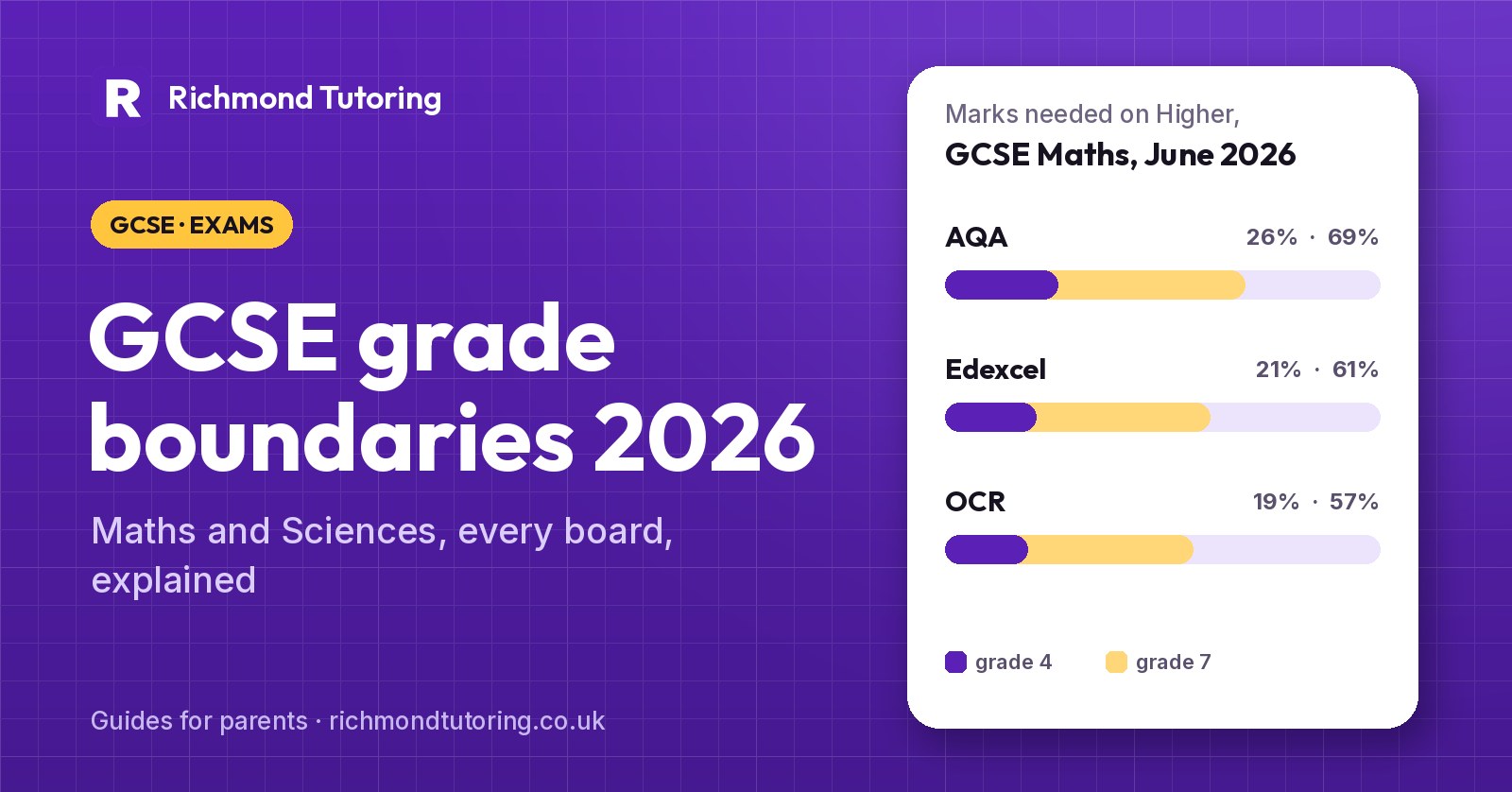 GCSE · Exams & revision
GCSE grade boundaries 2026: Maths, Science and Computer Science
June 2026 GCSE grade boundaries for Maths, Combined Science, Biology, Chemistry, Physics and Computer Science (AQA, Edexcel, OCR), and when 2027's come out.
 A-Level · Maths
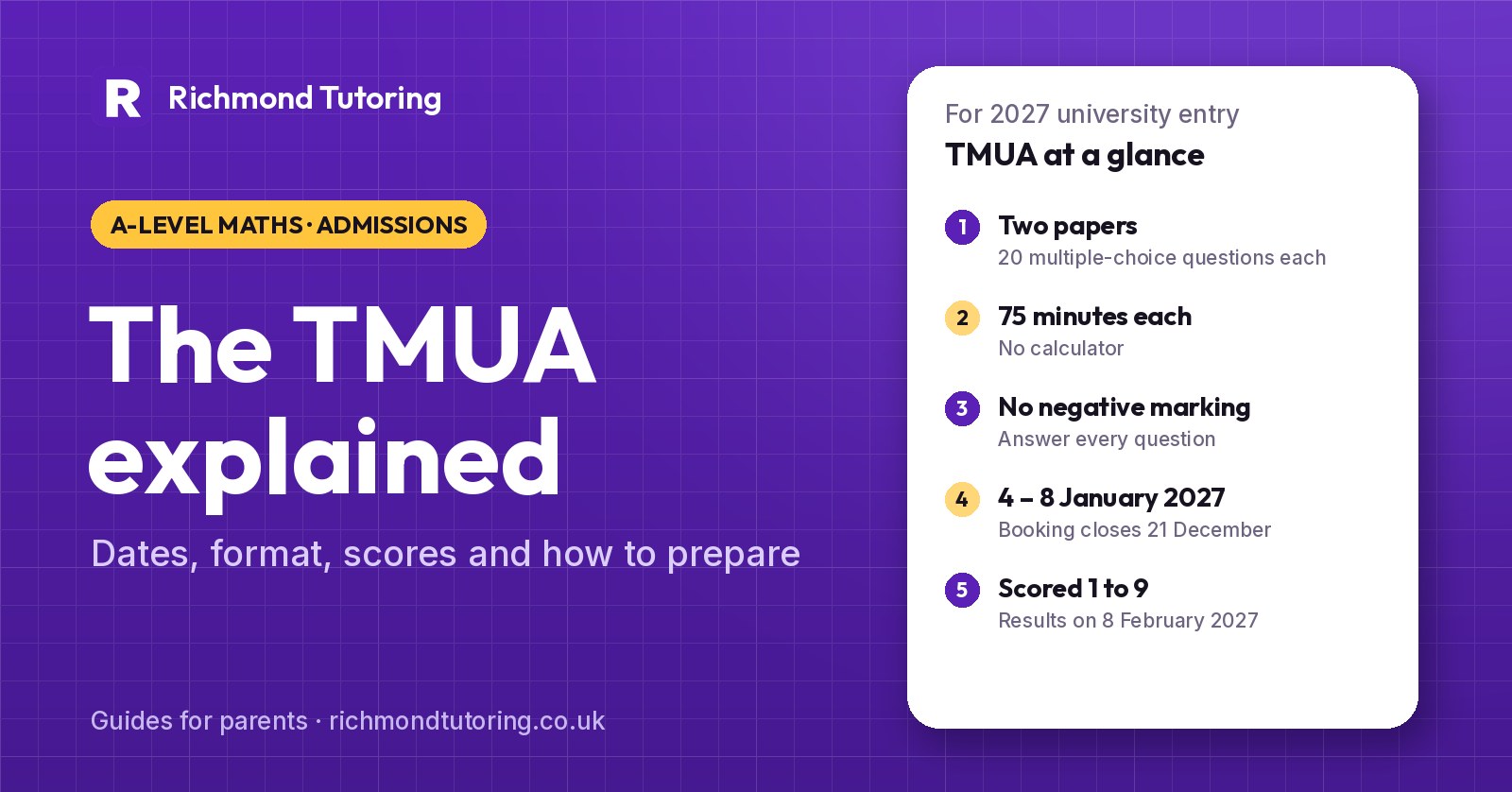
What is the TMUA? Dates, format, scores and how to prepare
The TMUA maths admissions test explained: which universities use it, the January 2027 dates and booking deadline, the format, scores and a plan to prepare.
 GCSE · Exams & revision
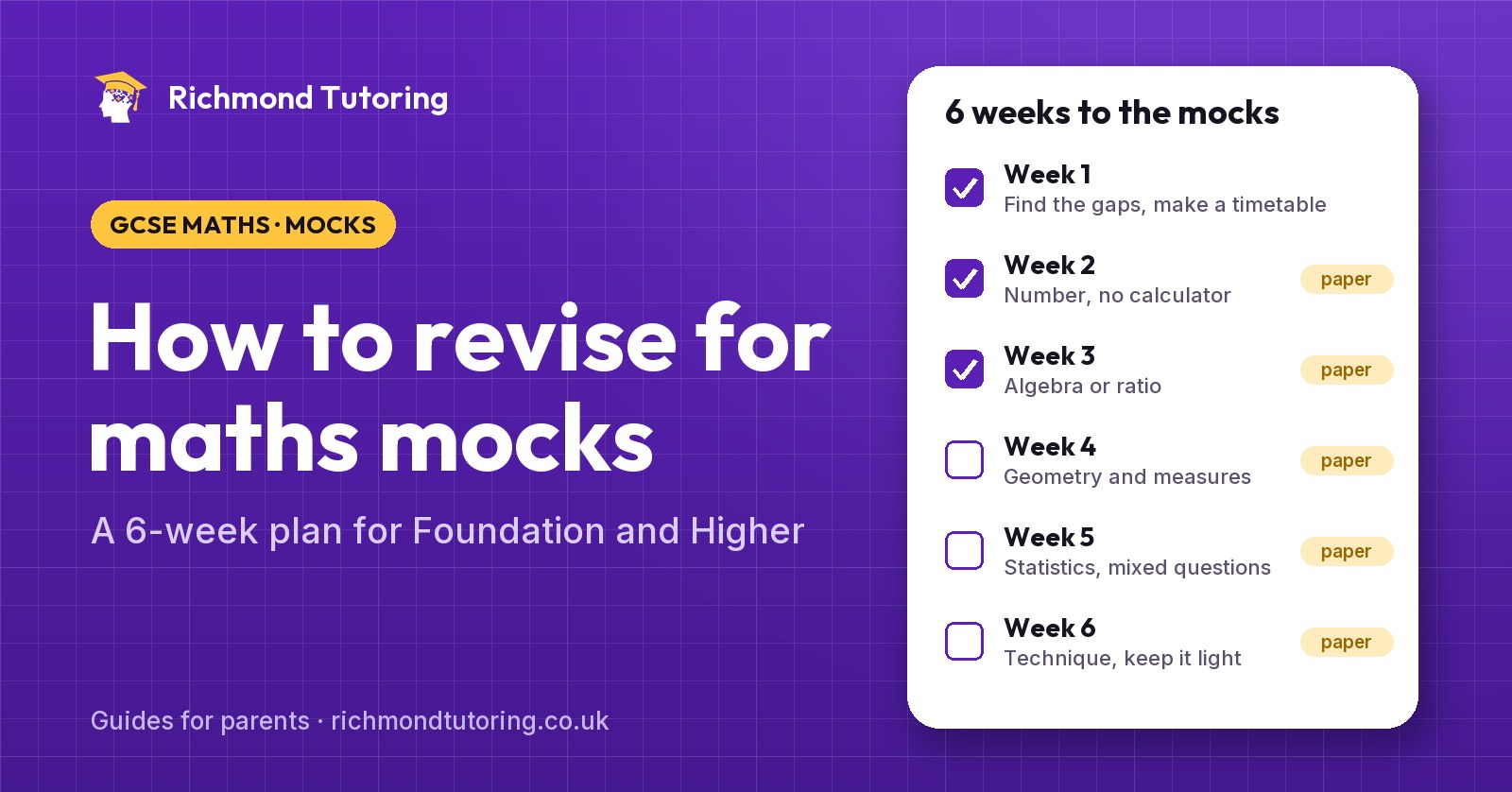
How to revise for GCSE Maths mocks: a 6-week plan
Revise for GCSE Maths mocks in 6 weeks: find the weak topics, focus on the highest-mark areas, and follow a weekly timetable for Foundation or Higher.
 GCSE · Exams & revision
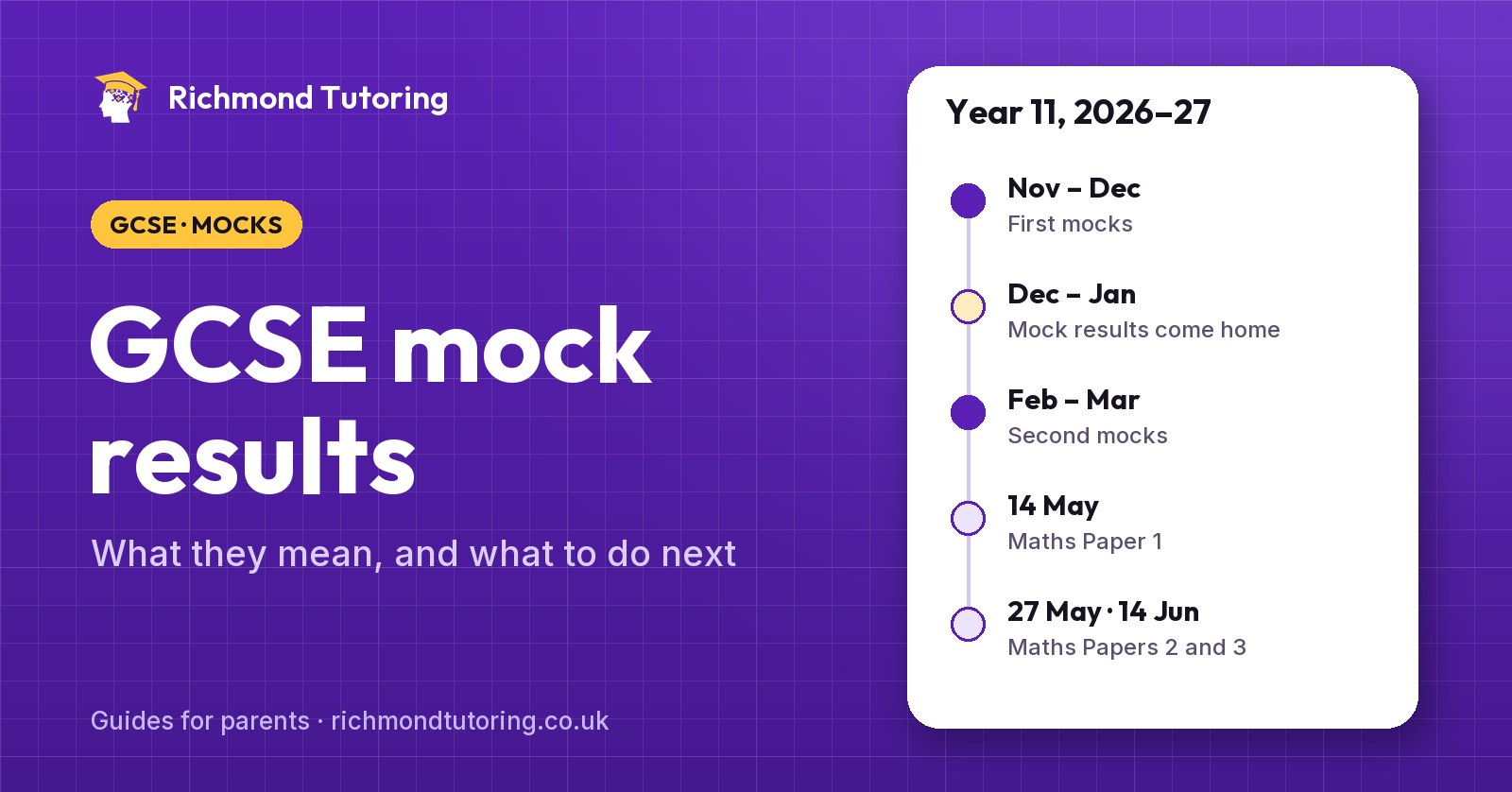
GCSE mock results: what they mean and what to do next
When are GCSE mocks in 2026–27, when results come out, and do they count? How schools use mock grades, how to read a bad result, and what to do next.
 For parents
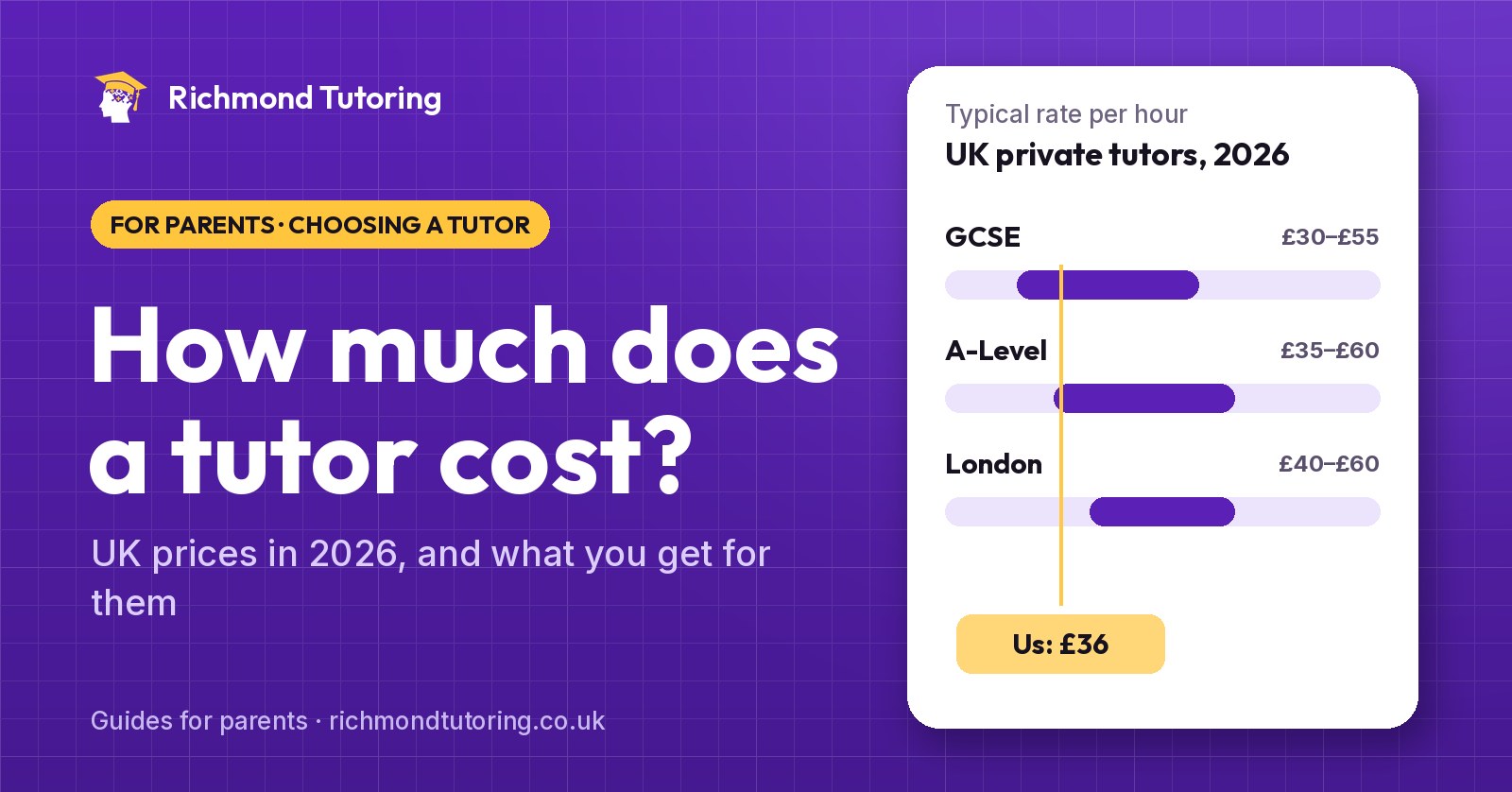
How much does a tutor cost in the UK? 2026 prices for parents
UK tutors charge about £30–£55 an hour for GCSE and £35–£60 for A-Level in 2026. What drives the price, extra costs to check and what a year costs.
 GCSE · Maths
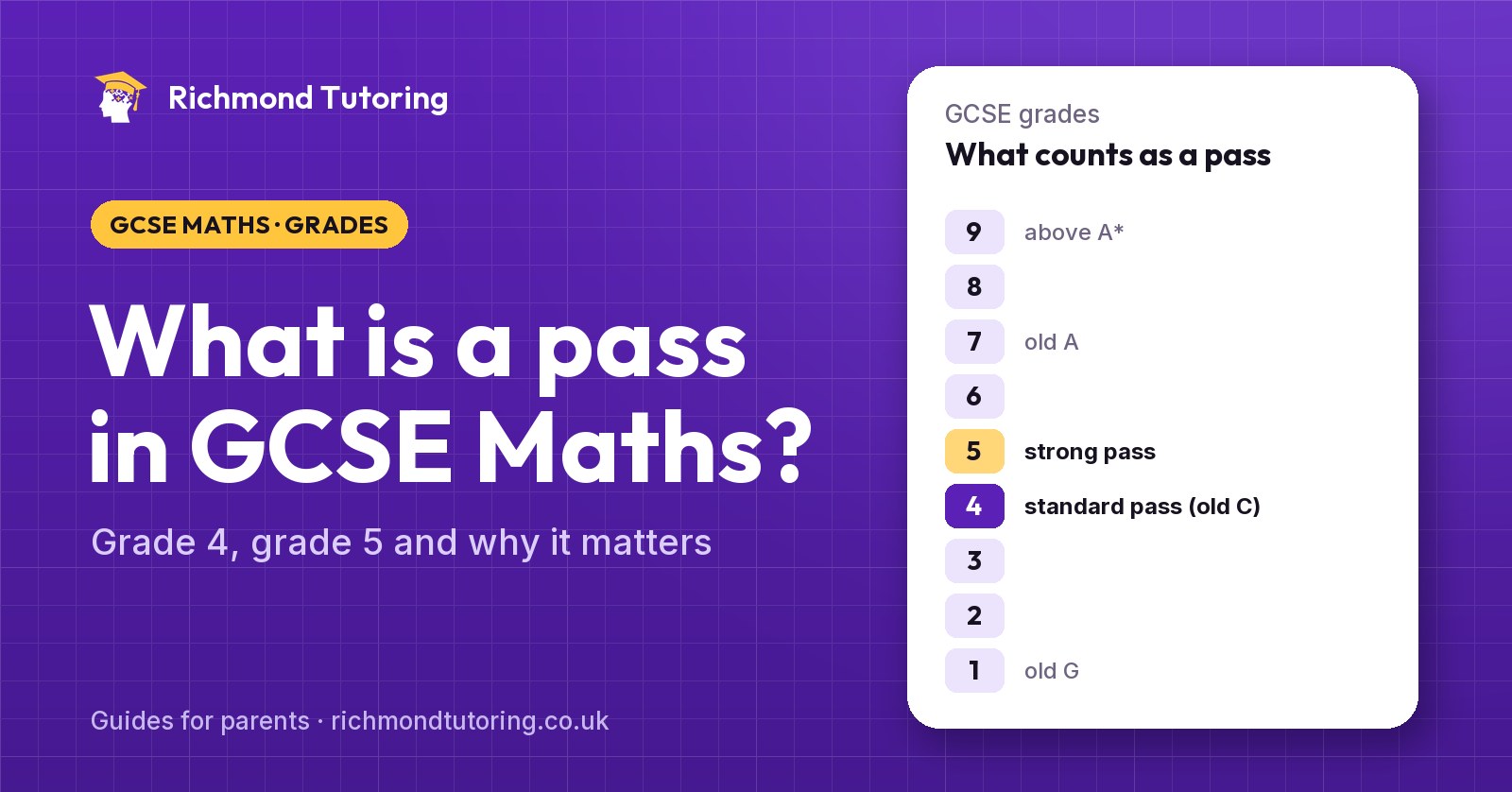
What is a pass in GCSE Maths? Grade 4 and grade 5 explained
Is a 4 a pass in GCSE Maths? Yes: grade 4 is a standard pass (old C), 5 a strong pass. June 2026 marks by board, and what happens below a 4.
 GCSE · Maths
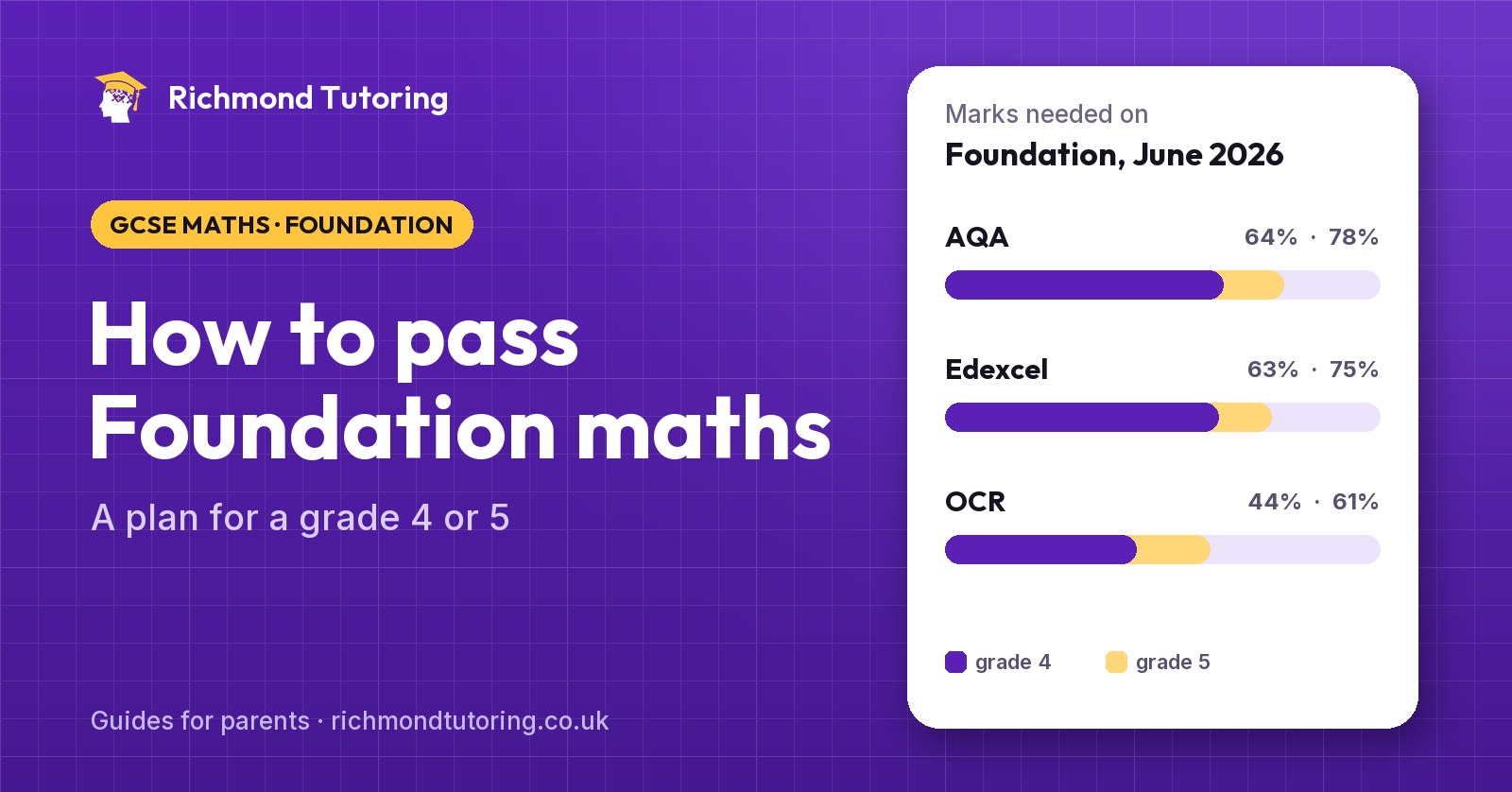
How to pass GCSE Maths Foundation: a plan for a grade 4 or 5
Pass GCSE Maths Foundation: a grade 4 took 63–64% on AQA and Edexcel in 2026 (OCR 44%). The topics worth most marks and a 12-week plan for 2027.
 GCSE · Maths
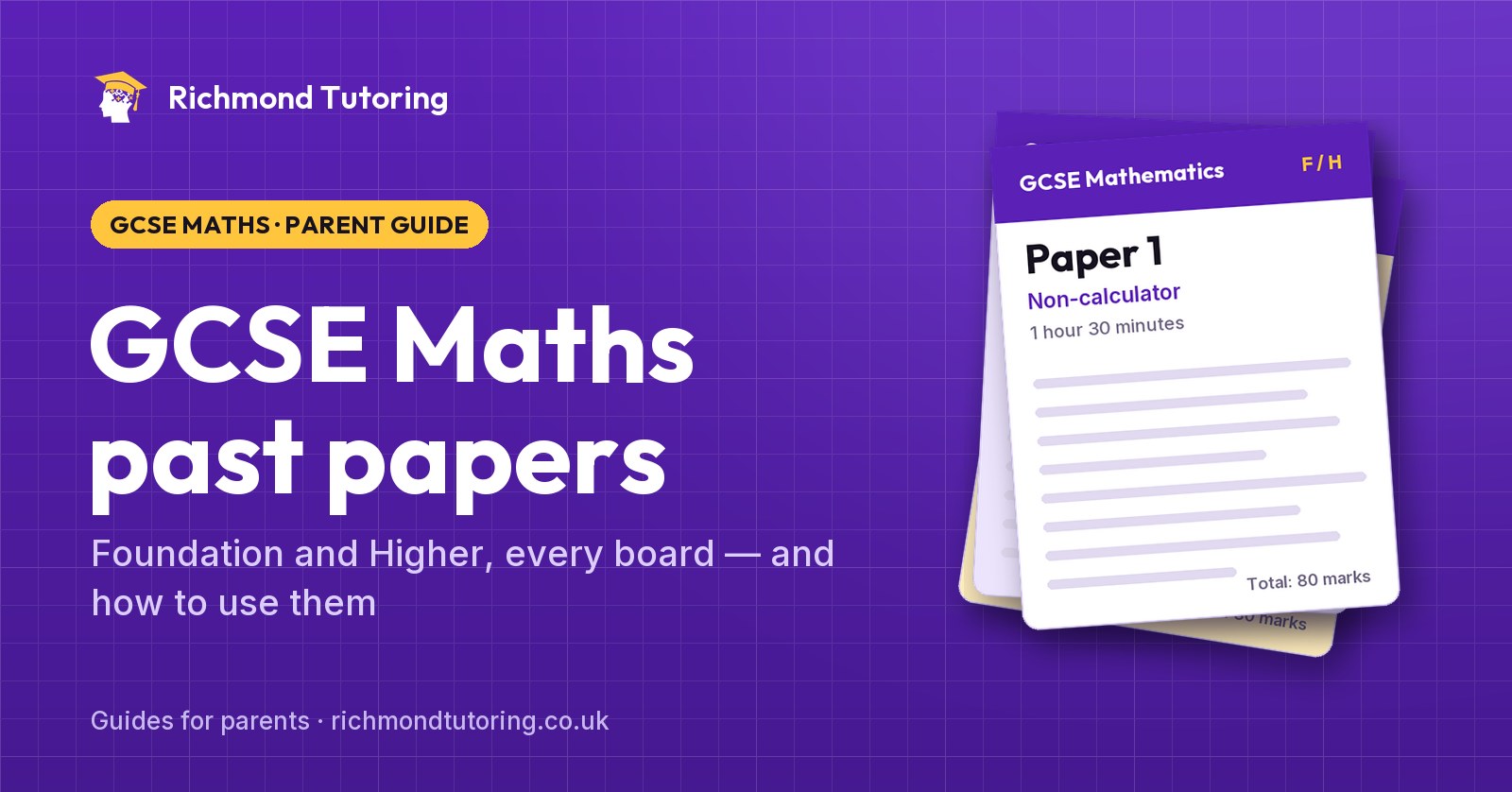
GCSE Maths past papers: Foundation and Higher, every board
Free official GCSE Maths past papers for AQA, Edexcel and OCR, why the newest are locked, and a Year 11 plan for summer 2027. Get a paper marked free.
 GCSE · Maths
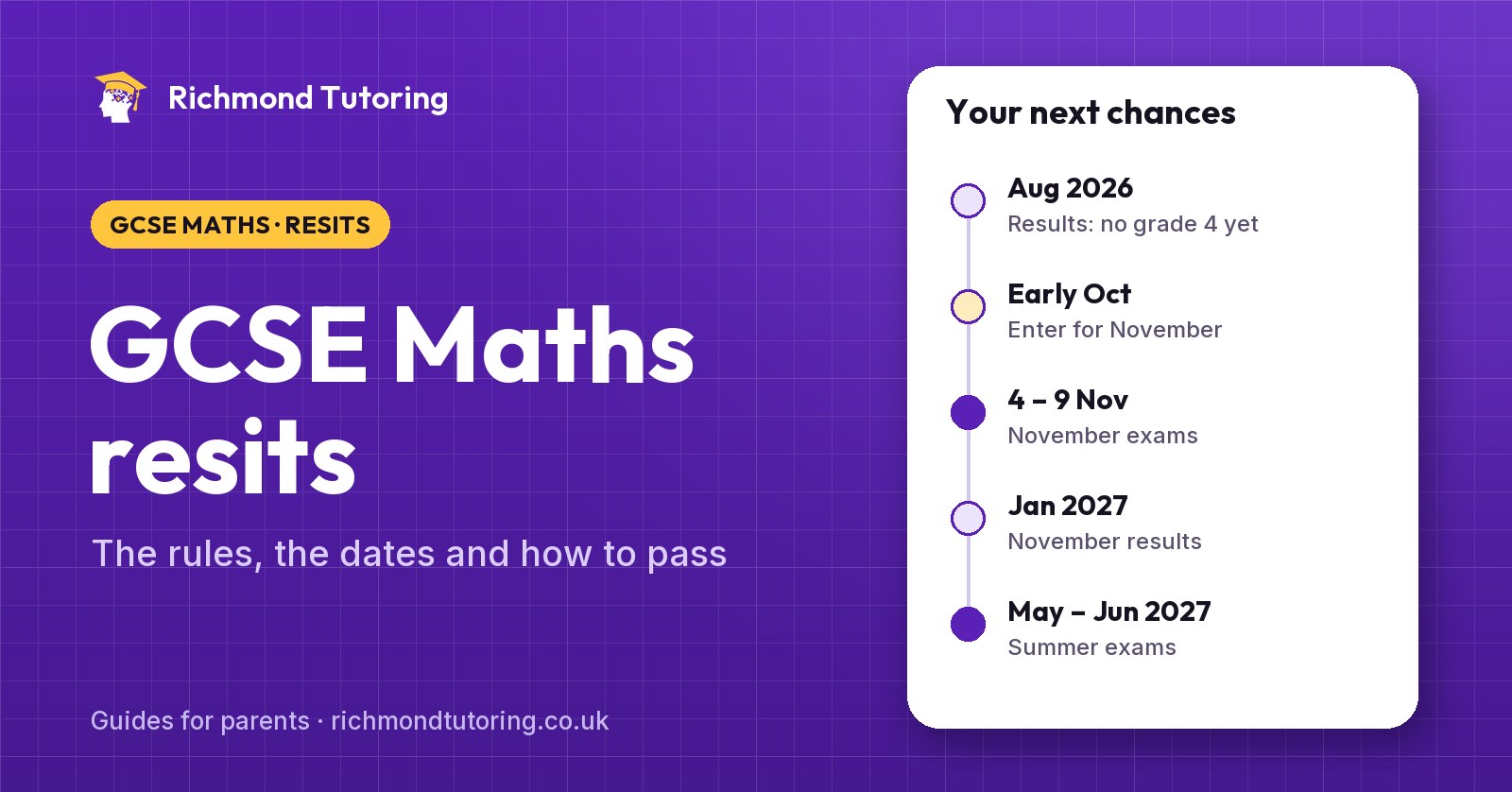
GCSE Maths resits: the rules, the dates and how to pass
GCSE Maths resit dates: November 2026 papers on 4, 6 and 9 Nov, summer 2027 on 14 May, 27 May and 14 June. Who must resit, which tier, and how to pass.
 GCSE · Maths
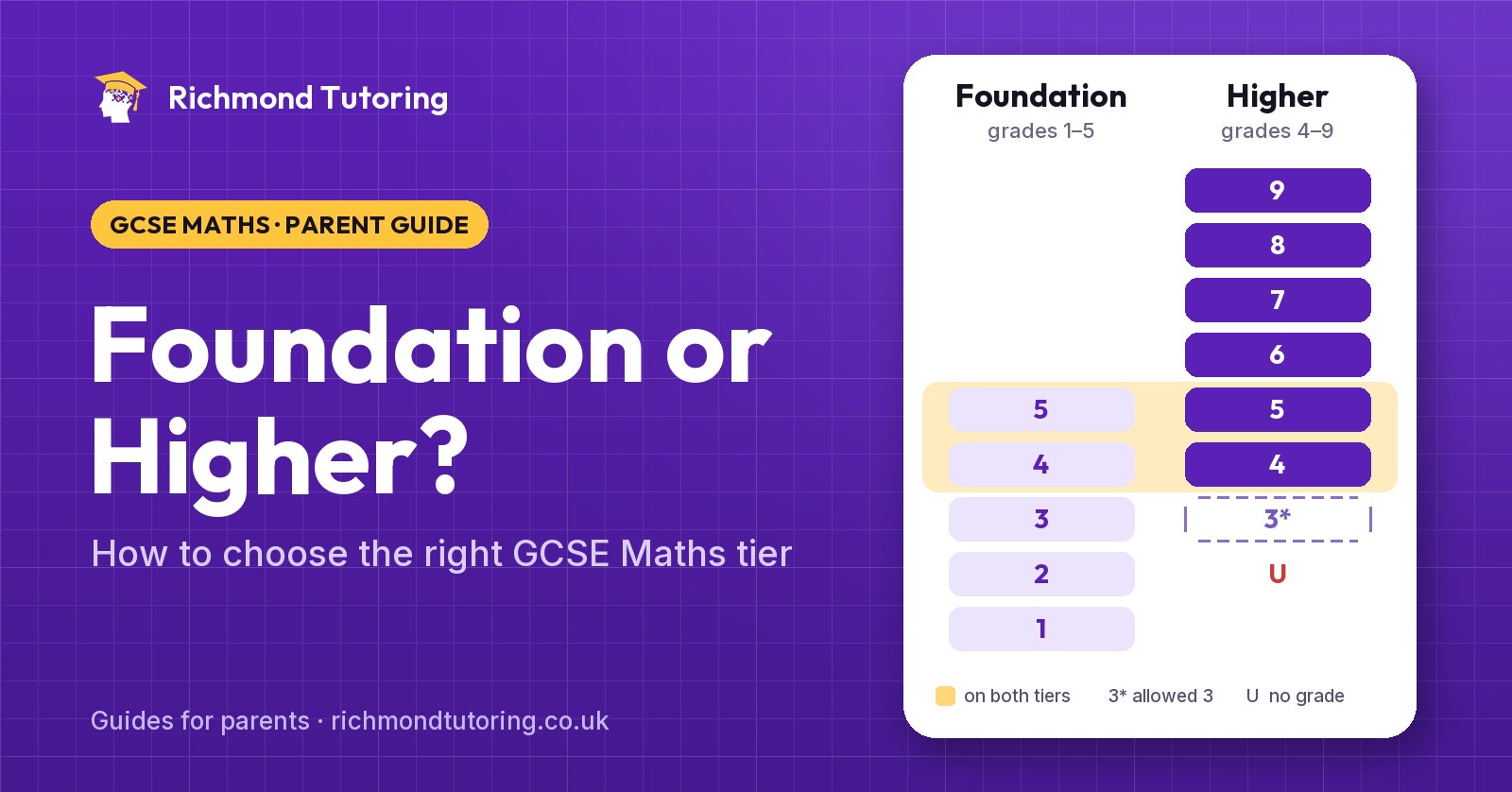
GCSE Maths Foundation vs Higher: which tier is right for your child?
Foundation or Higher GCSE Maths? Grades 1–5 vs 4–9, the marks a 4 or 5 took in June 2026, the risk on Higher, and how to choose for 2027.
Start with a free demo class
A real 45-minute lesson with a specialist, free, before you decide anything. Tell us the subject, the year group and the exam board, and we’ll tell you honestly whether we can help.
- No placement fee, no contract, nothing to sign
- We reply to every enquiry the same day