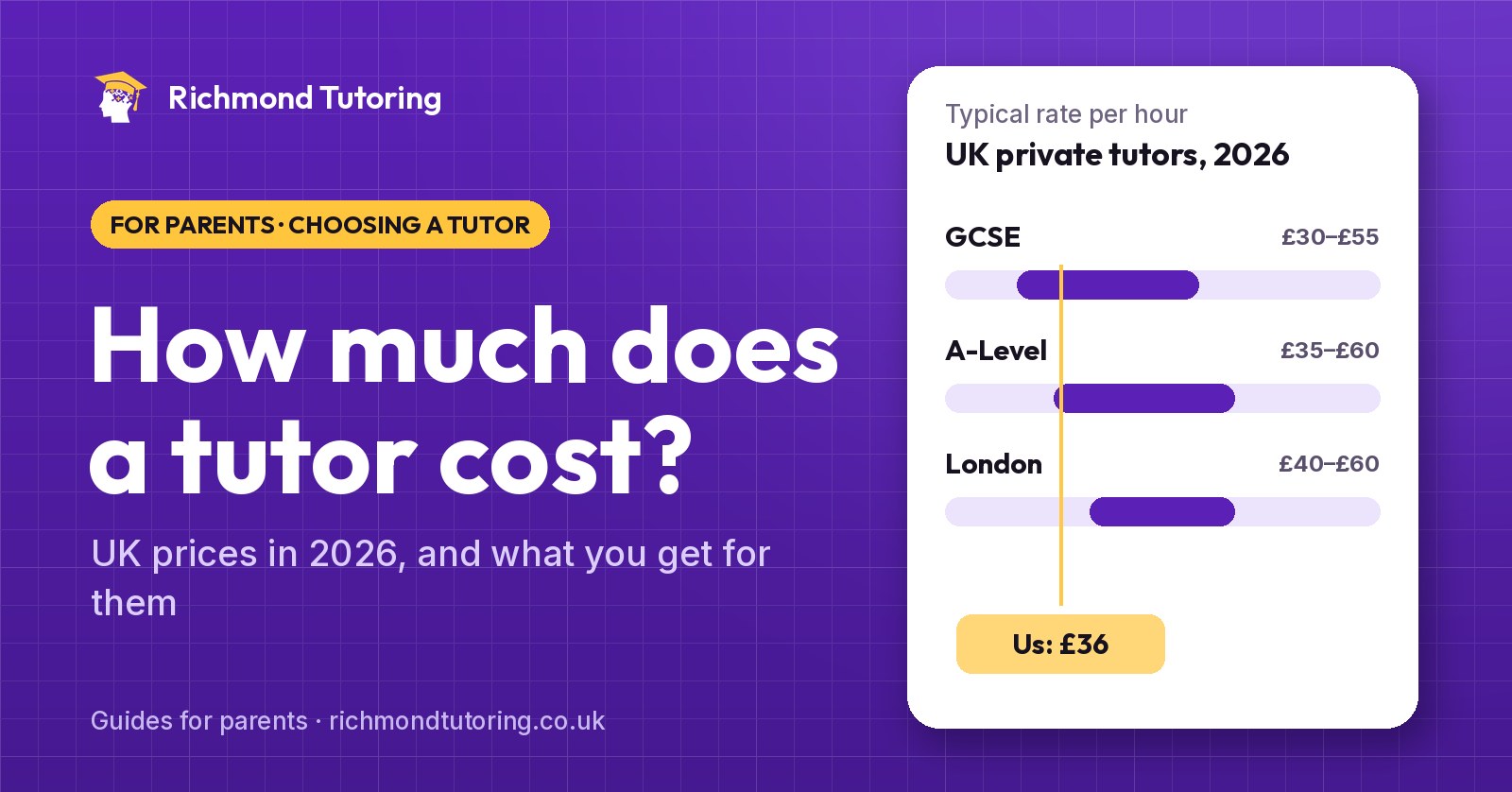
Most private tutors in the UK charge £30 to £55 an hour for GCSE and £35 to £60 an hour for A-Level in 2026, with specialists and agencies charging £60 or more. London and the South East sit at the top of those ranges, and online lessons usually cost less than a tutor who travels to your home. This guide explains what drives the price, the extra costs to look out for, and how to work out what tutoring will cost over a school year.
The short answer: Budget about £35 to £45 an hour for a good GCSE tutor and £35 to £60 for A-Level, with specialists and agencies charging £60 or more. In London, in-person lessons cost about £40 to £60 an hour, with agencies charging more. At Richmond Tutoring, it's £36 per 60-minute lesson, at every level, with a free 45-minute demo class first. There's no contract, and you pay after the lessons.
How much do tutors charge per hour in the UK? (2026)
| Level | Typical hourly rate | Specialists and agencies |
|---|---|---|
| GCSE (Years 10 and 11) | £30 to £55 | Above the typical range |
| A-Level (Years 12 and 13) | £35 to £60 | £60 or more |
These ranges are based on published prices as of autumn 2026. Tutorful's published averages are about £36 an hour for GCSE and about £42 for A-Level, and MyTutor's lessons range from about £22 to £57. Specialist agencies charge more: The Profs starts at £70 an hour. These are typical figures, not fixed prices. Individual tutors set their own fees, so you'll find tutors on either side of them.
What makes one tutor cost more than another
- Level. A-Level tutors charge more than GCSE tutors because fewer people can teach the content well, and the stakes (university offers) are higher.
- Subject. Maths, physics, chemistry and further maths are in high demand, so tutors in those subjects can usually charge more than average.
- Experience. A qualified teacher or an exam-board examiner charges more than a university student. For most students, what matters is that the tutor knows the exact specification and can explain it clearly.
- Where you live. In-person tutoring in London and the Home Counties costs 15 to 25% more than the national average, partly because of travel time.
- Online or in person. Online tutors don't travel, so they often charge less for the same hour. Online lessons also let you choose from tutors across the country, not just those near you.
- Agency, platform or independent. Agencies vet and match tutors and handle the admin, which costs more. Tutoring platforms take a commission from every lesson, which is built into the price you see. Independent tutors are often cheapest, but you do the vetting yourself.
Extra costs to check before you book
The hourly rate isn't always the whole price. Before you agree to anything, ask about:
- Registration or matching fees. Some agencies charge a one-off fee before the first lesson.
- Packages paid upfront. Some tutors and agencies ask you to buy 10 or 20 lessons in advance. Check what happens to unused lessons if it doesn't work out.
- Minimum terms and notice periods. A contract can tie you in for a term even if your child stops benefiting.
- Cancellation rules. Most tutors charge for lessons cancelled at short notice. Find out how much notice you need to give.
- Travel fees for in-person tutors who come to your home.
- Materials, such as workbooks or access to online resources.
- VAT. Individual private tutors don't usually charge VAT, but agencies may. Check whether the price you're quoted includes it.
How much will tutoring cost over a year?
Most students have one lesson a week during term time. Here is what that adds up to at three different hourly rates:
| At £36 an hour | At £45 an hour | At £60 an hour | |
|---|---|---|---|
| A term (about 12 lessons) | £432 | £540 | £720 |
| January to the summer exams (about 18 lessons) | £648 | £810 | £1,080 |
| A school year (about 36 lessons) | £1,296 | £1,620 | £2,160 |
Students preparing for exams sometimes add a second weekly lesson in the last six to eight weeks before the summer exams. Many families also start in Year 10 or early Year 11 rather than waiting for mock results or predicted grades, which spreads the work (and the cost) over a longer time.
Tutoring centres charge differently, with a monthly fee rather than an hourly rate. As of autumn 2026, Explore Learning membership starts from about £114 a month, and Kumon charges a monthly fee per subject that each centre sets.
How to tell if a tutor is worth the money
A higher price doesn't always mean better teaching. The things that make the biggest difference are:
- They know your child's exact exam board and tier. AQA, Pearson Edexcel and OCR papers are set differently. A good tutor teaches to the right specification.
- They start by finding the gaps. The first lessons should show where marks are being lost, not repeat what school already covers.
- They tell you how it's going. Short, honest updates after lessons, and a clear plan.
- They're safe. Anyone teaching a child should have an Enhanced DBS check. DBS checks aren't a legal requirement for privately arranged tutors, so ask to see one.
- You can try before you commit. A free trial or demo lesson shows whether your child gets on with the tutor.
It's also fair to ask any tutor what results their students have had. You can see ours on our results page.
Want a second opinion? Book a free 45-minute demo class with a specialist tutor — no contract, and an honest view of what your child needs.
Book a free demo classOur prices at Richmond Tutoring
Our tutors are experienced, specialist teachers in their subjects. Tutors with that experience usually charge more than the averages above. We keep our price at about the average GCSE rate, because every lesson is taught online: there's no travel time to pay for, and we can work with experienced tutors from across the UK, not just those who live nearby.
So you get an experienced tutor for close to the price of an average one, and our pricing is simple:
- £36 per 60-minute lesson, at every level (KS3, GCSE and A-Level), in every subject we teach: maths, science, physics, chemistry, biology and computer science. That includes KS3 maths, GCSE maths, GCSE science and A-Level maths.
- No contract and no upfront packages. You can stop at any time.
- You pay after the lessons, with an invoice weekly or monthly.
- Free cancellation with 24 hours' notice.
- A free 45-minute demo class first, before you decide anything.
Every lesson is 1-to-1, live and online with an experienced specialist tutor, planned around your child's exam board. Our tutors are Enhanced DBS-checked.
The bottom line
A good GCSE tutor in the UK usually costs £35 to £45 an hour, and an A-Level tutor £35 to £60, with London tutors, specialists and agencies charging more. Look past the hourly rate: check for upfront packages, contracts and cancellation rules, and choose a tutor who knows your child's exam board and starts by finding the gaps. If you're not sure where your child stands, the free GCSE Maths check gives an estimated grade and the topics to work on in about 25 minutes.