Free demo class

GCSE Science Tutor | 1-to-1 Online Science Tuition for Years 10–11

Richmond Tutoring provides 1-to-1 online GCSE science tutoring for students in Years 10 and 11 across the UK, in Combined Science and Triple Science. Lessons follow your child’s exam board, including AQA, Pearson Edexcel and OCR, at Foundation and Higher tier, and focus on the science and the question types costing them marks. Every lesson is taught by a specialist science teacher and worked from real past papers. Bring a marked mock to a free 45-minute lesson and we will show you where the marks are going.

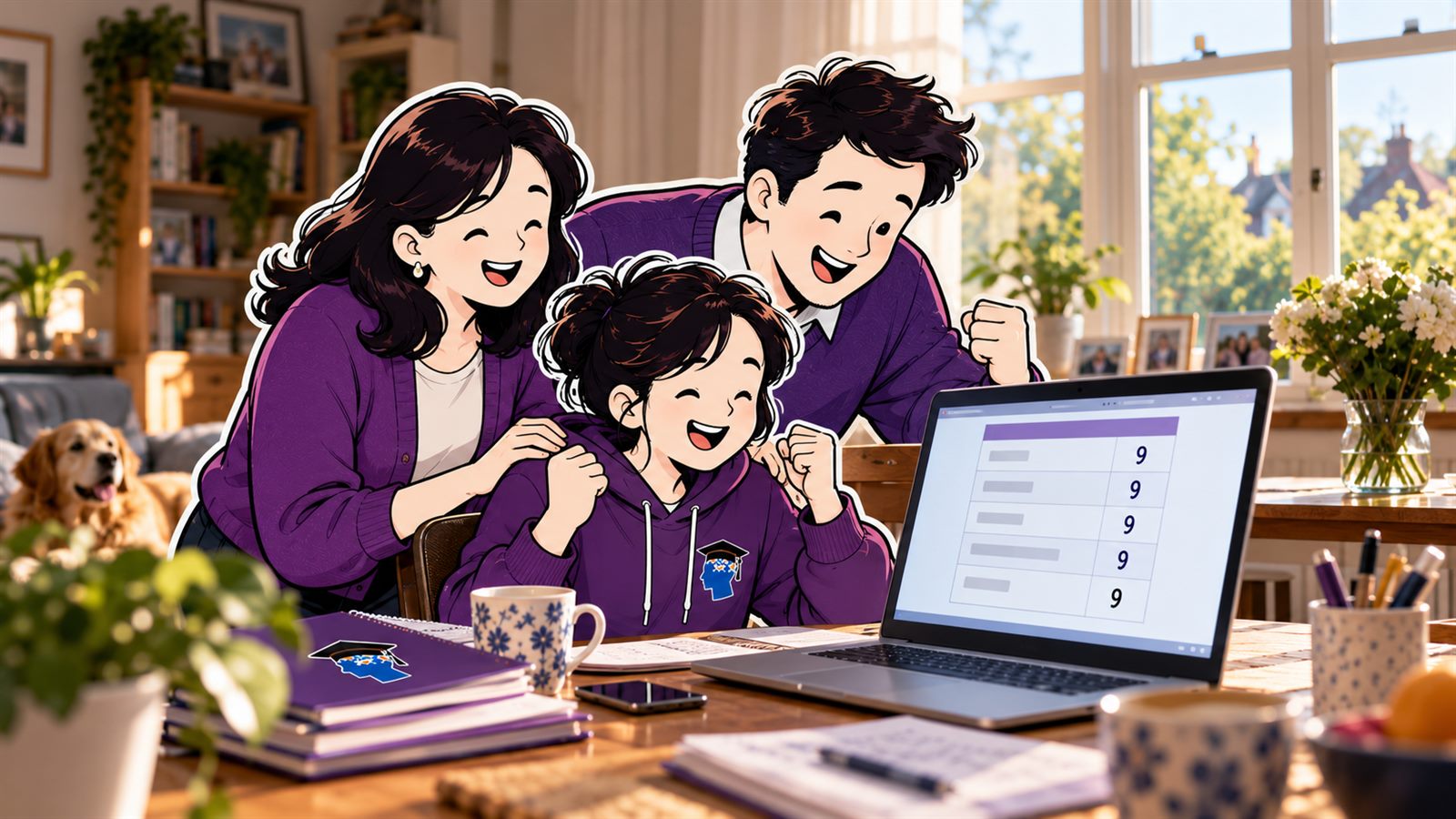
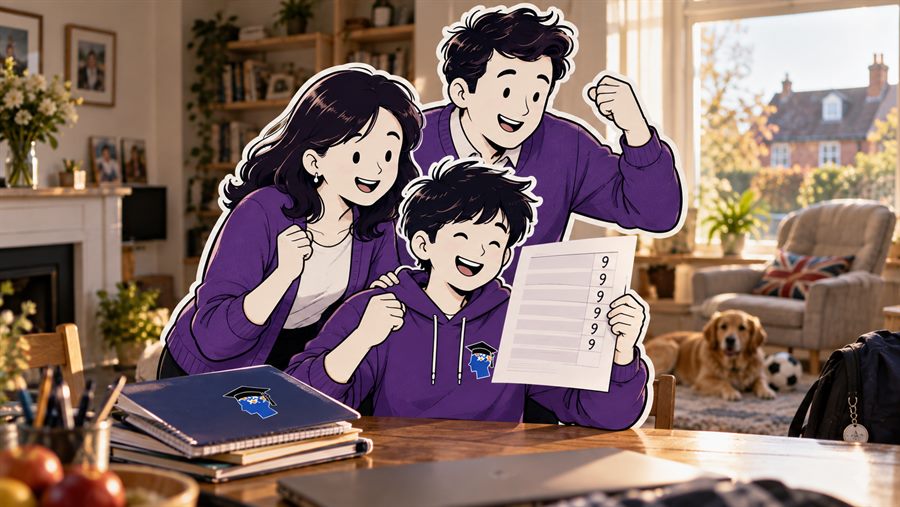
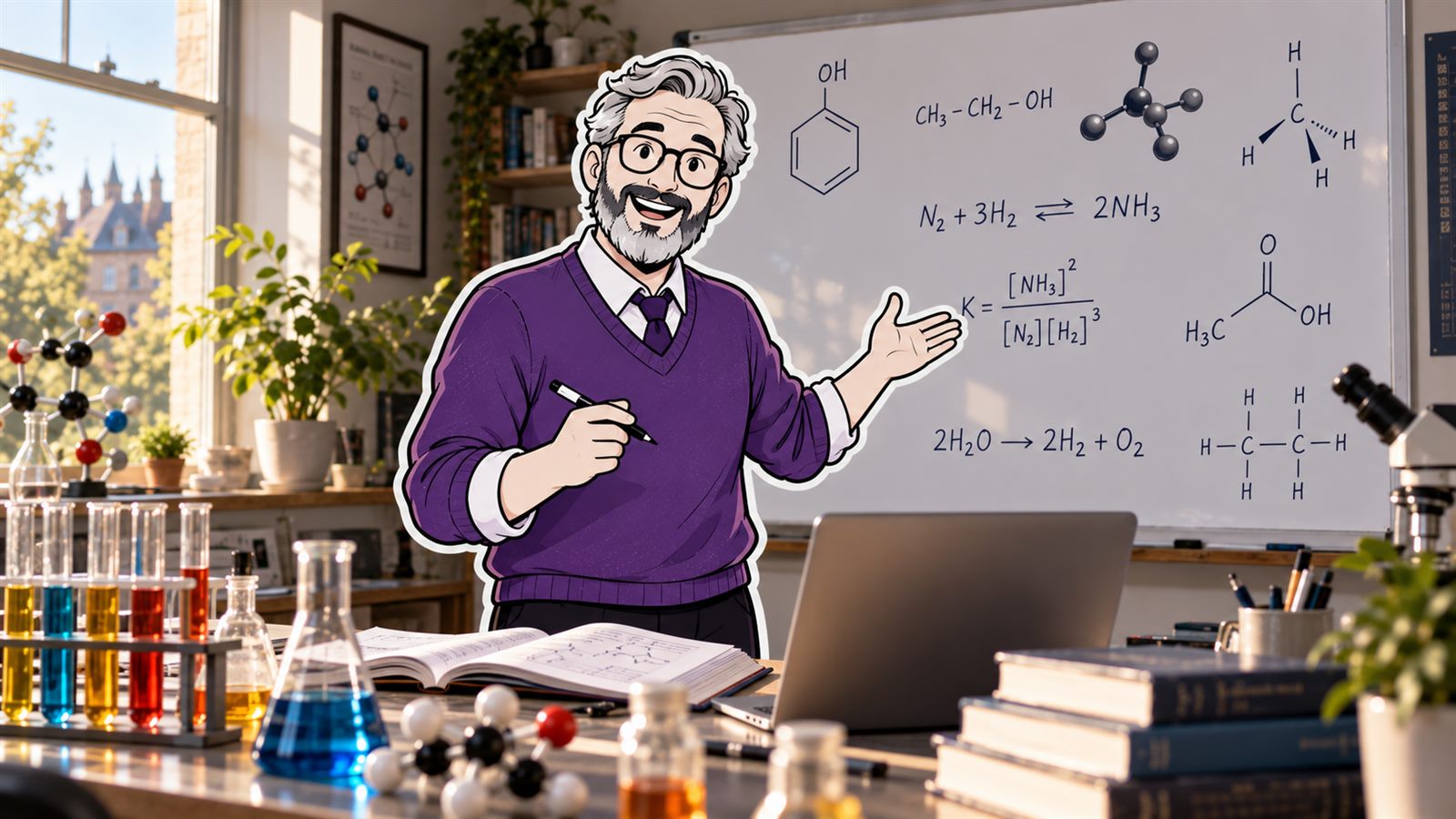
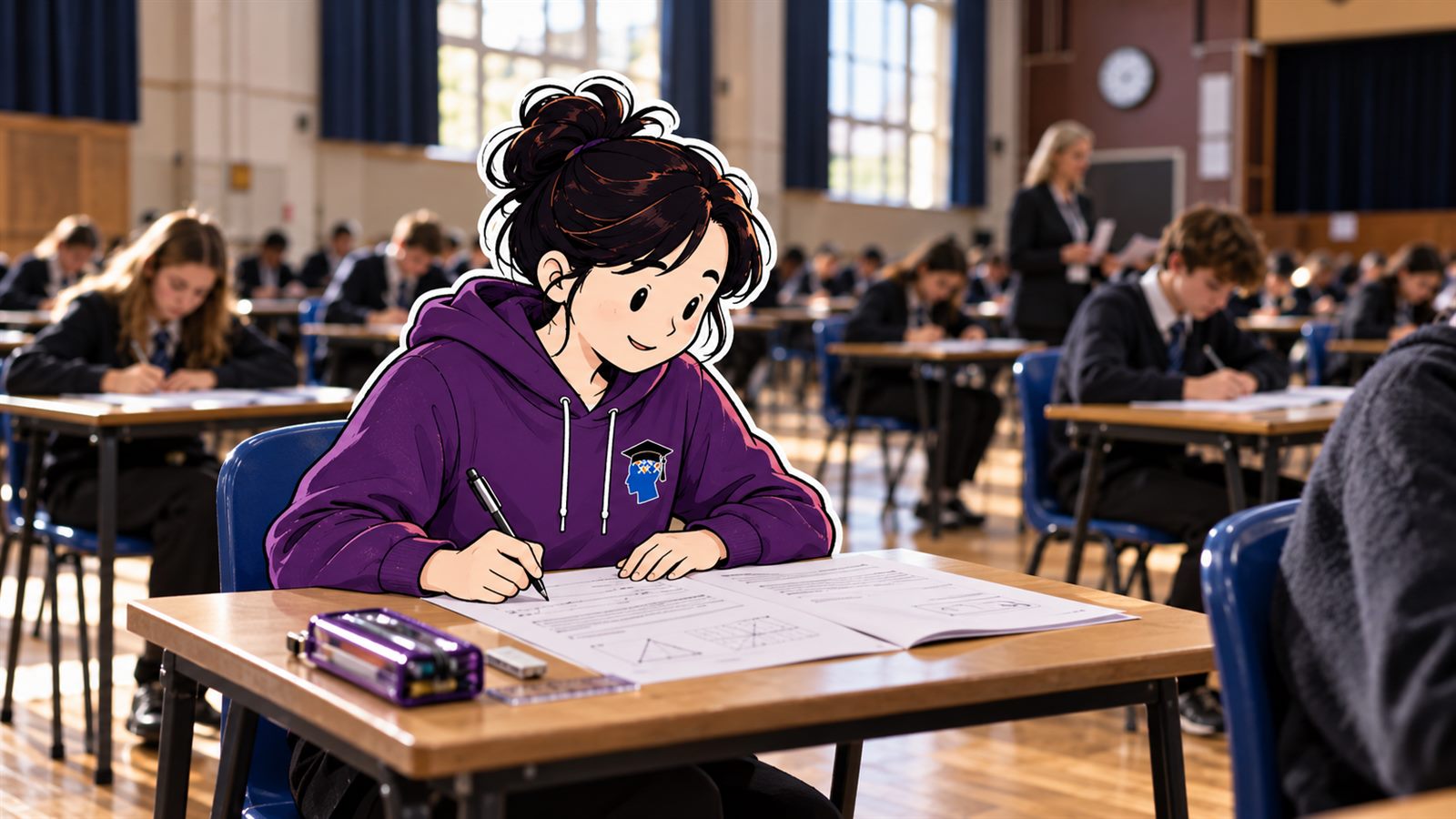
A chemistry tutor at a whiteboard of organic structures and equilibrium equations, with conical flasks and a molecular model on the bench alongside. A Year 11 student sitting a science paper in a school hall. A family at the kitchen table celebrating a results page showing a column of top grades.
The short answer

GCSE Science Tutoring at a Glance

Richmond Tutoring offers 1-to-1 online GCSE science tutoring for Years 10–11 across the UK, covering Combined and Triple Science on AQA, Pearson Edexcel and OCR at Foundation and Higher tier.

Subject
GCSE Science
Years
Years 10–11
Tuition
1-to-1 online
Students
UK students
Exam boards
AQA, Pearson Edexcel, OCR
Tiers
Foundation & Higher
Lesson length
60 minutes
Price
£36 per lesson
First lesson
Free 45-minute demo
Why us

Why Parents Choose Richmond for GCSE Science Tutoring

What we do differently across Year 10 and Year 11, whichever course your child is on.

A GCSE Science plan built around your child

We start with their course, exam board and Foundation or Higher tier, then look at what is actually holding them back across biology, chemistry and physics. For Combined Science, we pay particular attention to the weaker science because one double grade covers all three.

We make GCSE Science click

There is a lot to learn across three subjects, from cells and chemical reactions to forces and electricity. We help your child understand what is happening and why, rather than memorising disconnected facts. That makes unfamiliar questions much easier to tackle.

Understanding that turns into marks

GCSE Science rewards more than knowing the right fact. Your child needs to apply equations, interpret data, explain processes, handle required practicals and write answers that match what the mark scheme is looking for. We practise these skills with real exam questions so the learning shows up in their results.

Where we come in

What Does a GCSE Science Tutor Help With?

Most parents do not arrive looking for a GCSE science tutor. They arrive with a sentence about their child. These are the ones we hear most.

She is fine at biology and chemistry but physics is dragging her down.

One science pulling the grade down

The defining problem of Combined Science. One double grade is awarded across all three, so the weakest science caps the other two. We find the topics inside it that are actually costing marks, rather than re-teaching a whole subject.

He cannot get moles and balancing to stick.

Chemistry calculations

Moles, concentration, balancing and the calculations built on them are where chemistry marks go. They reward understanding what the numbers represent rather than a memorised sequence, so that is what we teach, then drill against your board’s own questions.

Her six-mark answers get two or three marks.

Longer written answers

Six-mark questions are marked on whether the explanation is linked and complete, not on how much is written. We work on structure: what the command word is asking, which points earn marks, and how to say them in the order the mark scheme expects.

He did the practical in class but cannot answer questions about it.

Required practicals

Doing an experiment once and answering exam questions about it are different skills, and only the second one is examined. We go through each practical on your child’s specification: the method, what is being measured and why, the typical results and the questions boards ask about them.

The mocks were bad and we do not know where to start.

After the mocks

A marked mock is the most useful thing a family can bring us. We go through it question by question, work out whether the marks went on content, on technique or on the clock, and plan from that rather than from the syllabus.

The school is deciding her tier and we are not sure.

Foundation or Higher

Foundation caps the result at 5-5; Higher goes to 9-9 but has very little safety net below 4-3. Schools make the entry decision, usually in Year 11. We can tell you what we are seeing in her work, and teach the Higher content she needs if that is the way it is going.

Who we teach

GCSE Combined Science Tutoring by Exam Board

We teach the four Combined Science specifications used in most UK schools. Lessons work from your child’s own board’s past papers and mark schemes.

Edexcel GCSE Combined Science Tutor

Edexcel Combined Science tutoring for specification 1SC0

We provide Pearson Edexcel Combined Science tutor online, 1:1, for Year 10 and Year 11 UK students.

What students face

  • Six papers of 1h 10m, 60 marks each — 360 in total
  • Two papers each in biology, chemistry and physics
  • Core practicals, examined across all six papers
  • Sixty-mark papers, where the clock does real damage
How we teach it
  • Whole papers rehearsed against the clock
  • Each core practical worked through as an exam question
  • The science that is furthest behind, targeted first
  • Six-mark answers built against Edexcel mark schemes

AQA GCSE Combined Science Tutor

AQA Trilogy Combined Science tutoring for specification 8464

We provide AQA Combined Science: Trilogy tutor online, 1:1, for Year 10 and Year 11 UK students.

What students face

  • Six papers of 1h 15m, 70 marks each
  • Content organised by science, two papers each
  • 21 required practicals: 7 biology, 6 chemistry, 8 physics
  • Practical knowledge worth at least 15% of the marks
How we teach it
  • Each required practical: method, variables, results, errors
  • The weakest science found first, because it shows on two papers
  • Calculations with the substitution and the units shown
  • Past AQA questions and mark-scheme wording

OCR GCSE Combined Science Tutor

OCR Gateway Combined Science tutoring for specification J250

We provide OCR Gateway Combined Science A tutor online, 1:1, for Year 10 and Year 11 UK students.

What students face

  • Six papers of 1h 10m, 60 marks each
  • Practical Activity Groups rather than a numbered list
  • Practical skills examined in every paper
  • A separate Twenty First Century suite some schools use instead
How we teach it
  • The suite confirmed first, because the papers differ
  • The practical activities worked through as exam questions
  • Method marks: the working, the units, the final line
  • Timed practice on OCR’s own papers

AQA Synergy GCSE Combined Science Tutor

AQA Synergy Combined Science tutoring for specification 8465

We provide AQA Combined Science: Synergy tutor online, 1:1, for Year 10 and Year 11 UK students.

What students face

  • Four papers of 1h 45m, 100 marks each
  • Cross-science themes rather than three separate strands
  • Two papers on life and environmental sciences, two on physical
  • Questions that cross from one science into another
How we teach it
  • Synergy’s own past papers, never Trilogy ones translated
  • Revision organised by theme, the way the papers are
  • Practice at questions that move between sciences mid-answer
  • Each practical worked through as an exam question
The two routes

Combined Science or Triple Science?

Combined Science is one course worth two GCSEs. Triple Science is three separate GCSEs. Both can lead to A-Level sciences.

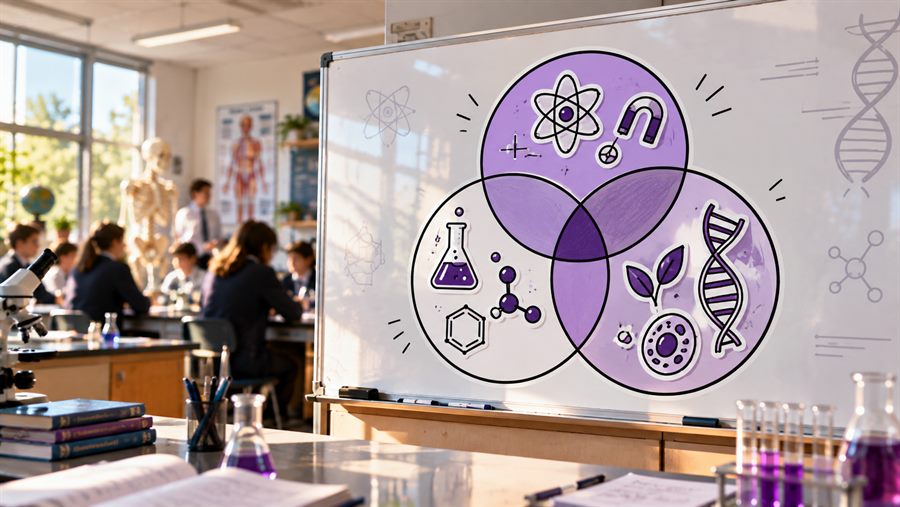
A school science lab, with biology, chemistry and physics drawn as three overlapping circles on the whiteboard.

GCSE Combined Science Tutor

Combined Science covers Biology, Chemistry and Physics in one GCSE qualification worth two GCSEs.

Your child studies all three sciences, but works towards one double grade rather than three separate grades. That means a weakness in one science affects the overall result, so tutoring needs to keep an eye on all three.

At Richmond Tutoring, we focus on: strengthening the science your child finds hardest while keeping the other two moving, with lessons matched to their exam board, tier and current gaps.

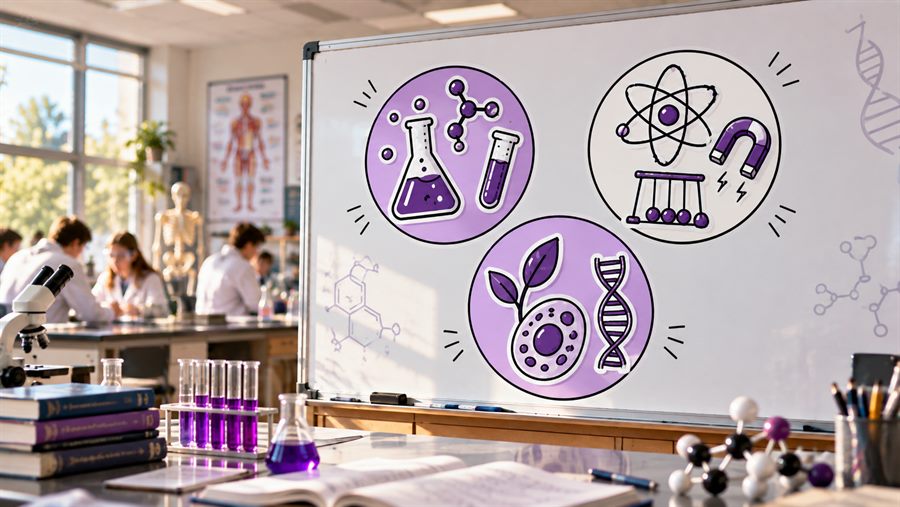
A school science lab, with biology, chemistry and physics drawn as three separate circles on the whiteboard.

Triple Science Tutor

Triple Science means taking separate GCSEs in Biology, Chemistry and Physics.

Your child gets more content and greater depth in each science, with a separate grade for Biology, Chemistry and Physics. There is more to cover, but also more opportunity to build strong knowledge in each subject.

At Richmond Tutoring, we focus on: building a clear plan across all three sciences, giving extra attention to difficult topics while making sure your child stays on top of the full course.

The separate sciences

We Provide Classes for Separate GCSE Science Subjects

We teach Combined Science and the three separate GCSEs. Whichever route your child is on, a lesson is about one science at a time — and the rate is the same either way.

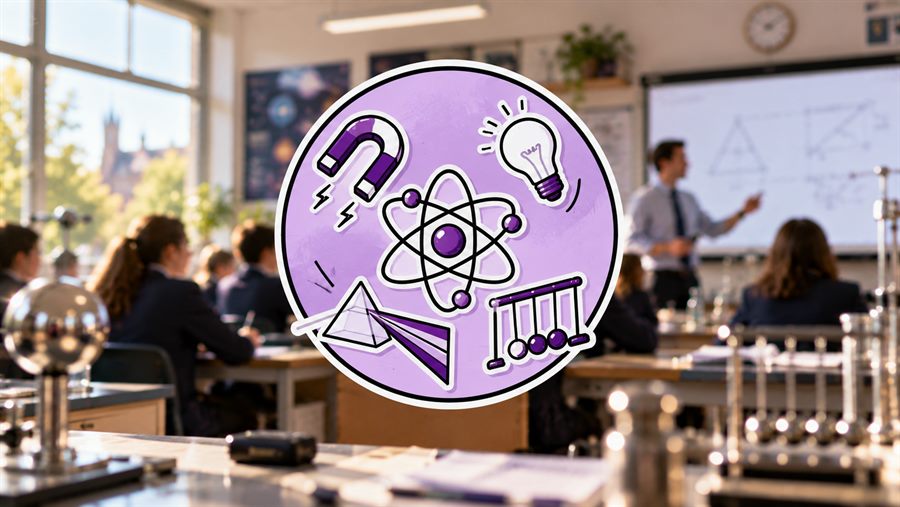
A physics classroom, with a pendulum, a circuit, an atom and a ray diagram drawn on the board.

GCSE Physics Tutoring

Physics asks your child to connect ideas with maths. Knowing the formula is only the beginning; they need to know which equation to choose, how to use it and what the answer tells them.

We work on:

  • Selecting, rearranging and applying equations to questions where the method is not obvious
  • Required practicals, graphs and calculations so your child knows how to handle the different ways physics is tested
  • Units, significant figures and working so avoidable errors do not cost marks
GCSE Physics tutoring
A chemistry classroom, with flasks, a molecular model and a hexagonal ring drawn on the board.

GCSE Chemistry Tutoring

Chemistry asks your child to move between what they can see and what is happening at particle level. Then the maths arrives — particularly with moles, concentration and quantitative chemistry.

We work on:

  • Moles and concentration, by understanding what the numbers represent before tackling the calculation
  • Formulae, equations and balancing until your child can use them without relying on a memorised sequence
  • Required practicals and longer explanations, with the scientific detail needed for the marks
GCSE Chemistry tutoring
A biology classroom, with DNA, a cell, a leaf and a microscope drawn on the board.

GCSE Biology Tutoring

Biology has a lot of content, but remembering it is only half the challenge. Your child also needs to connect ideas, explain processes and apply what they know when the question looks unfamiliar.

We work on:

  • Six-mark answers that connect several biological ideas into one clear explanation
  • Active recall across the course so earlier topics do not disappear as new ones are learnt
  • Required practicals, data and unfamiliar scenarios so your child can apply their knowledge beyond the textbook
GCSE Biology tutoring
Year by year

GCSE Science Tutors for Year 10 and Year 11

Year 10 is about keeping up with three sciences at once. Year 11 is about turning what is known into marks.

GCSE Science Tutoring for Year 10

Year 10 is when science stops feeling like KS3 with harder words. Content arrives quickly across three sciences at once, and each topic is built on the last: atomic structure feeds bonding, which feeds the calculations; cell biology feeds almost everything after it.

A Year 10 science tutor works on keeping pace and closing gaps before the next topic depends on them, and introduces exam-style questions early so Year 11 is not the first time they appear.

  • Re-teaching the topics that did not land in class
  • Equations and calculations, until they are reliable
  • Exam-style questions, early rather than late

GCSE Science Tutoring for Year 11

In Year 11 the job changes from learning content to earning marks. Mocks come in the autumn or winter, schools use them to guide revision and tier entry, and the papers themselves are in May and June.

A Year 11 science tutor works from the mock papers outwards: the topics and question types costing the most marks, then past papers for your child’s board and the technique to answer them.

  • Mock papers, gone through question by question
  • Past papers for your child’s own specification
  • Command words, six-mark answers and shown working
Foundation or Higher

GCSE Science Foundation & Higher Tier Tutoring

Combined Science is tiered, and the tier decides which grades are available. Foundation runs from 1-1 to 5-5; Higher runs from 4-4 to 9-9. The tuition changes with the tier.

Foundation Tier Science Tutor

Make the core science secure.

The work is accuracy: the core content in all three sciences, the standard calculations, and explanations that earn the marks they are worth. A Foundation student cannot be awarded above 5-5 however well they do, so the marks given away to avoidable slips are the ones that decide the grade.

The aim: a secure 4-4 or 5-5, with nothing given away.

Higher Tier Science Tutor

Reach the grades only Higher offers.

Higher carries content that never appears on a Foundation paper, including the harder calculations, and its questions expect more steps with less prompting. It also has little safety net: a narrow miss can be awarded 4-3, and below that it is a U.

The aim: turn secure science into 6-6 and above.

Schools confirm tier entries during Year 11 and the decision is theirs. If your child is on the borderline, we will tell you what we are seeing and teach the Higher content either way.

How it works

How Our GCSE Science Tutoring Works

Three steps, and you meet the tutor in a real lesson before deciding anything.

  1. 1
    Two parents at the kitchen table on a video call, a phone propped up in front of them.
    Step one

    Tell us about your child

    Fill in the form or send us a WhatsApp message. We arrange the free demo class and match your child with a specialist GCSE science tutor.

  2. 2
    A chemistry tutor at a whiteboard of structures and equations, conical flasks on the bench.
    Step two

    Take the demo class

    Take the free 45-minute lesson, and sit in if you want to. See how the lesson goes, ask us everything you want to ask, and only go ahead with GCSE science lessons if you are convinced.

  3. 3
    A family at the dining table looking pleased with a school report.
    Step three

    Lessons begin

    Lessons begin, weekly. Your child starts learning the GCSE science they were stuck on, and that is what turns into marks on the GCSE Science papers.

Reviews and results

See What Families Say, and What Our Students Get

Every review is a Google review, quoted as written. Every grade we publish was checked against a results slip — and we publish the method behind the number, not just the number.

Cost

What Will GCSE Science Tutoring Cost?

At Richmond Tutoring, the price for each 60-minute lesson of science for GCSE is as follows:

£36per hour

  • No contract
  • No placement fee
  • First lesson free

Combined Science tuition and Triple Science tuition cost the same here. The route changes the content, not the rate.

Questions

FAQs

What is GCSE Combined Science?

GCSE Combined Science covers biology, chemistry and physics in one course and is worth two GCSEs. Instead of two separate grades it gives a double grade on a 17-point scale, from 9-9 at the top down to 1-1. The two numbers are always the same or next to each other, so 7-7, 7-6 and 6-6 are all possible and 7-5 is not.

What does a 5-4 or 9-8 grade mean?

It is one double grade worth two GCSEs, one at each number. A 5-4 counts as one grade 5 and one grade 4. A 4-4 is two standard passes and a 5-5 is two strong passes. Because it is a single result across all three sciences, a weak science pulls the whole grade down — there is no separate good biology grade to make up for it.

Should my child sit Foundation or Higher tier?

It depends on the target grade. Foundation caps the result at 5-5; Higher offers 4-4 up to 9-9, with 4-3 allowed for a narrow miss and a U below that. Some content, including the more demanding calculations, appears only on Higher papers. Schools make the final entry decision, usually during Year 11, and we will give you an honest view from your child’s recent work.

Can one tutor cover all three sciences?

Yes, and for Combined Science that is usually the right way round, because the grade is awarded across all three. Lessons move between biology, chemistry and physics according to where the marks are going. If physics needs sustained separate attention, we will say so.

How are GCSE science required practicals assessed?

Through the written papers. There is no practical exam and no coursework. Students carry the practicals out in school, and questions about them — write or improve a method, name the variables, process the results, evaluate the errors — are worth at least 15% of the marks in every science paper.

How much maths is in GCSE science?

A fixed minimum share of the marks, set by Ofqual: at least 10% in biology, 20% in chemistry and 30% in physics. That covers rearranging equations, standard form, significant figures, percentages, ratios and reading and plotting graphs. It is where Combined Science students most often lose marks. If the maths itself is the problem, GCSE maths tutoring can run alongside.

How many papers are in AQA GCSE Combined Science: Trilogy?

Six. AQA Trilogy (8464) sets two biology papers, two chemistry and two physics, each 1 hour 15 minutes and worth 70 marks. All six are sat at the same tier, and the result is a single double grade.

What is the difference between AQA Trilogy and AQA Synergy?

They are two different AQA Combined Science specifications. Trilogy (8464) keeps biology, chemistry and physics as separate strands and sets six papers of 70 marks. Synergy (8465) organises the same sciences into cross-science themes and sets four papers of 100 marks, two on life and environmental sciences and two on physical sciences. Most schools teach Trilogy.

How much does a GCSE science tutor cost?

£36 for a 60-minute 1-to-1 lesson, whether your child takes Combined Science or Triple Science, and the same as every other subject and level we teach. There is no placement fee and no contract — you pay per lesson. The first 45-minute lesson is free.

Is an online GCSE science tutor available near me?

Yes. Every lesson is online and 1-to-1, so an online GCSE science tutor is available wherever you are in the UK — there is no travel and nothing depends on how far you live from us.

Most of the families we teach are in and around south-west London, and we also teach students across the rest of the UK. Places our students come from include Sunbury, Ealing Common, East Sheen, Hampton Hill, Brentford, Bedford Park, Ham, Strawberry Hill, Isleworth, Kew, Parsons Green, Tolworth, West Twickenham, Ashford, Hammersmith, Barnes, Hampton Wick, Syon, Acton, Petersham, Whitton, Hounslow, Grove Park, Shepherd’s Bush, Wimbledon, North Twickenham, Chiswick, Ravenscourt Park, Kingston upon Thames, Richmond, Hanworth, South Acton, Mortlake, Teddington, Hounslow West, Turnham Green, Brook Green, Twickenham, Fulwell, Gunnersbury, Barons Court, Surbiton, Richmond Hill, Feltham, Ealing, North Sheen, Hampton, Osterley, Stamford Brook, West Kensington, St Margarets, Heathfield, Kew Bridge, Fulham, Hampton Court, East Twickenham.
Book a free 45-minute GCSE science demo class

A real lesson, one to one, with a specialist GCSE science tutor — free, before you decide anything. Tell us the exam board and which science is going worst, and bring a marked mock if you have one.

  • No placement fee, no contract, nothing to sign
  • We reply to every enquiry the same day

Ask for the demo class

Five boxes, and we have filled two of them in for you.

We only use your details to answer this enquiry. Privacy · Terms

Thank you — that’s with us.

We’ll be in touch to arrange the demo class, usually the same day. If it’s urgent, ring 07901 286606.

Free 45-minute demo class. Tell us the year group and the exam board.

07901 286606 Book a free demo class