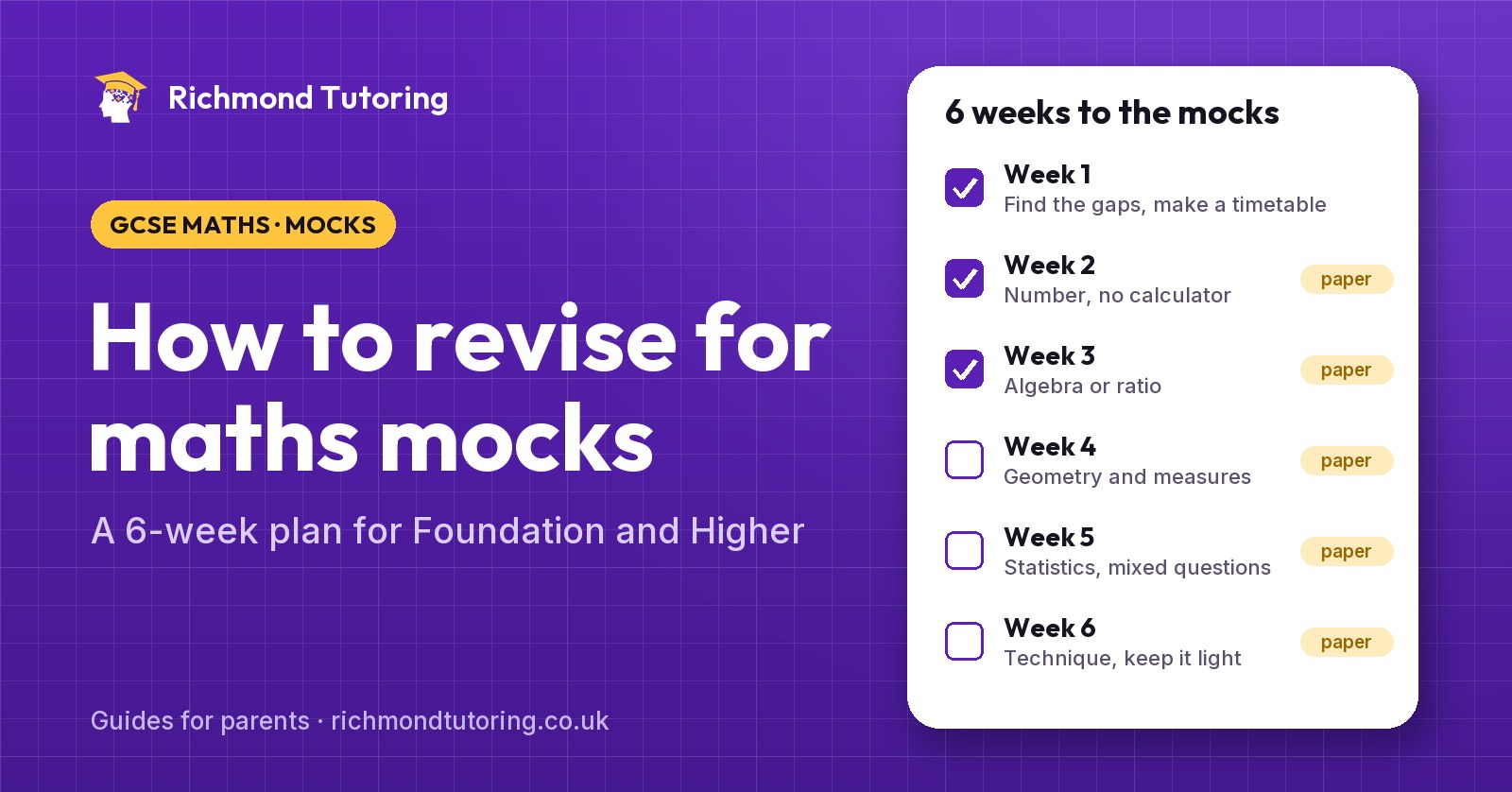
Year 11 mocks usually happen in November or December, and the results come home just before or after Christmas. A disappointing mock grade is common, and it isn't a prediction set in stone. If the mocks are still ahead, start with our 6-week mock revision plan. This guide explains how mocks are marked, what the grade is used for, and the steps that turn a mock result into a better grade in the summer.
The short answer: Mock exams don't count towards the final GCSE grade, but schools use them for predicted grades, sixth form and college applications and tier decisions (Foundation or Higher). Schools also keep mock papers and results in case exams are cancelled nationally, which isn't expected. The useful part isn't the grade, it's the marked paper: where the marks were lost and why. GCSEs start on 10 May 2027, and GCSE Maths Paper 1 is on Friday 14 May, so there are about 18–21 weeks between the mock results and Paper 1, depending on when the mocks are.
When are GCSE mocks in 2026–27?
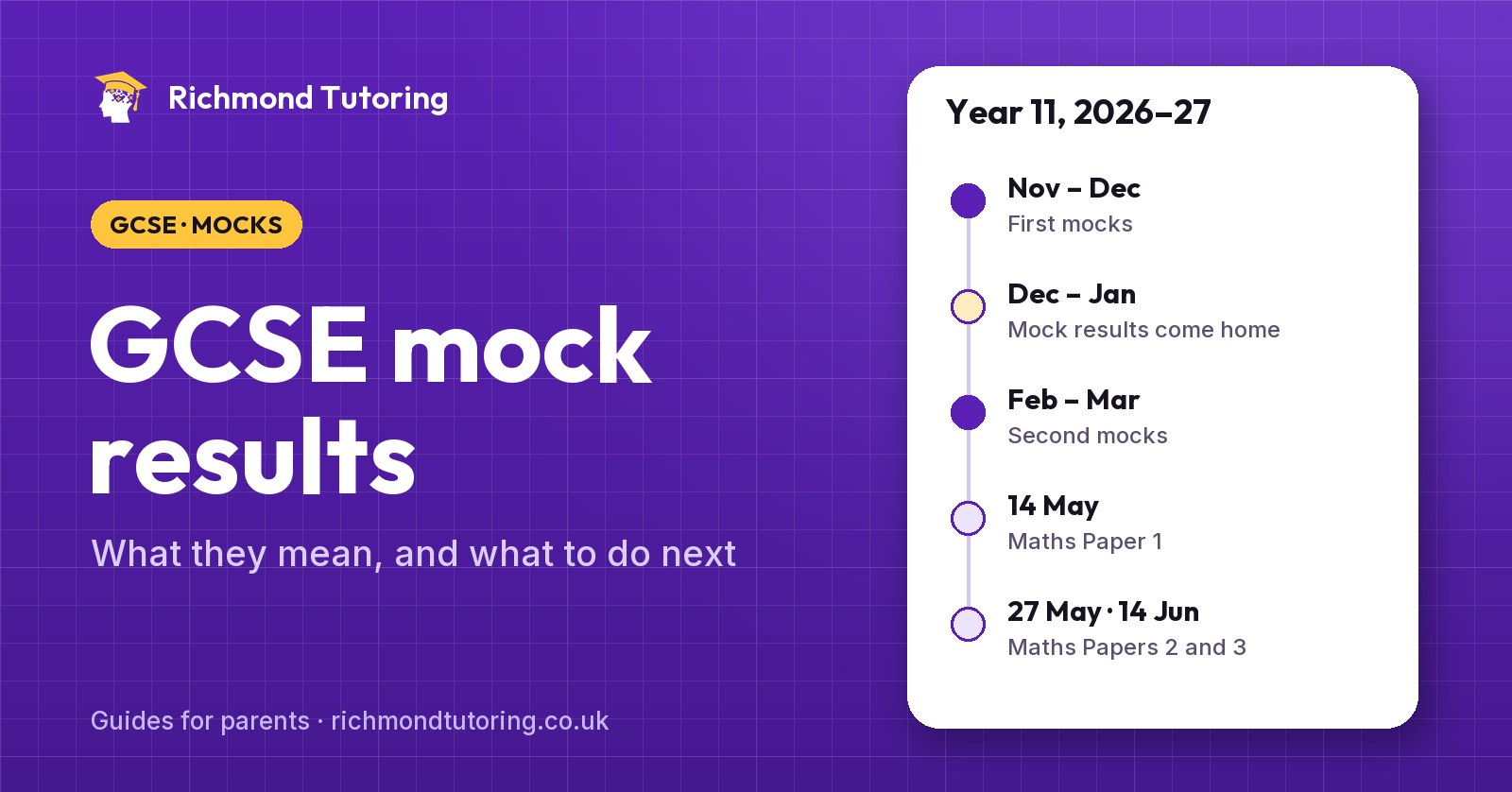
Each school sets its own mock dates, but most follow a similar pattern:
| Mock | Usual timing | Who sits them |
|---|---|---|
| First Year 11 mocks (often called PPEs) | November to early December 2026, sometimes January 2027 | Year 11 |
| Second Year 11 mocks | February to March 2027 | Year 11, in many schools |
| Year 10 mocks | June to July 2027 | Year 10 |
| A-Level mocks | January to February 2027 | Year 13 |
Your child's school will publish the exact dates, usually in a letter or on the school website a few weeks before. If you can't find them, ask the head of year.
Want a practice run before the school mock? Our free GCSE Maths mock exam uses real AQA or Edexcel past papers with an exam timer, and the answers are marked against the mark scheme.
When do mock results come out?
Most schools give results and marked papers back within a few weeks, in December or January for first mocks held in November or December. Many schools then run a second round in February or March. Mock dates vary between schools; the revision plan linked above covers when mocks usually happen and how to prepare for them.
For the real exams, GCSE Maths Papers 1, 2 and 3 are on 14 May, 27 May and 14 June 2027, and results day is Thursday 19 August 2027. Our guide to GCSE exam dates 2027 has the full timetable.
How mocks are marked
Most schools use real past papers or practice papers from the exam board, marked against the official mark scheme. The grade usually comes from the grade boundaries of a previous year. A few things make mock grades less precise than the real thing:
- The course isn't finished. In November, many students haven't been taught every topic yet, so some marks were never available to them.
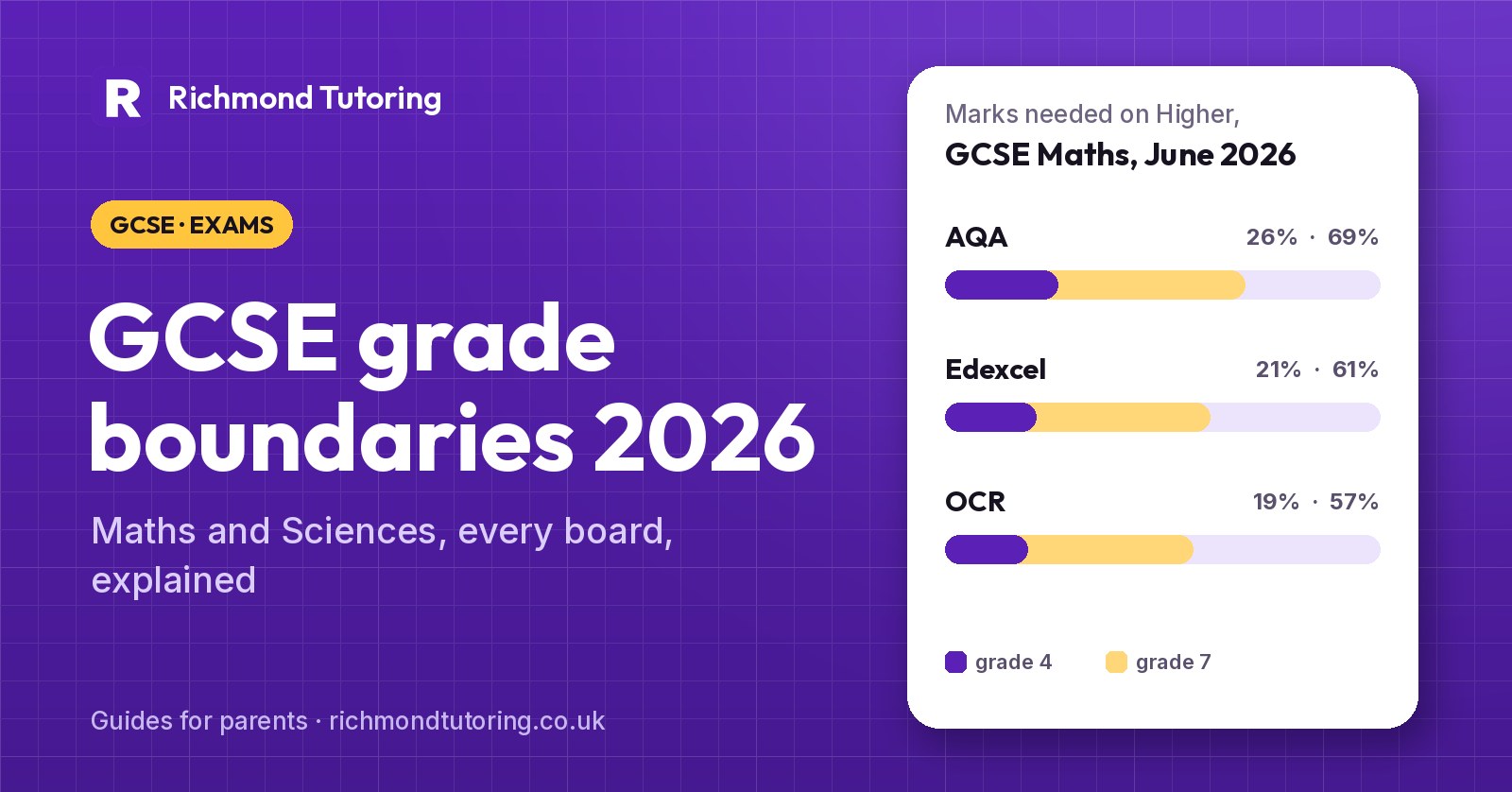
- Boundaries are borrowed. Schools apply an earlier year's boundaries, such as the GCSE grade boundaries for 2026, and some deliberately grade a little harshly to avoid complacency.
- One paper, not three. Some schools only set one or two of the three maths papers in the first mocks.
- Conditions vary. Nerves, a bad day or running out of time can cost a lot of marks in a single paper.
So a mock grade is a snapshot, not a forecast. Treat it as information about what to work on.
How accurate are mock grades? Not very, on their own. Cambridge Assessment looked at teachers' forecast grades for OCR GCSEs in 2014: they were exactly right 44% of the time and within one grade 87% of the time. Forecasts were too optimistic far more often (42%) than too pessimistic (14%). A mock result is a guide to the summer, not a promise in either direction.
What the mock grade is used for
Even though it doesn't count towards the GCSE, the mock grade matters:
- Predicted grades. Teachers use mock results to set GCSE predicted grades, and these go on sixth form and college applications.
- Sixth form offers. Many sixth forms ask for a 6 or 7 in maths for A-Level Maths, and a 5 or 6 for sciences and economics. A low predicted grade can make an offer conditional or harder to get.
- Tier entry. Schools decide whether a student sits Foundation or Higher. A mock result can move a student between tiers, usually after the second mocks. The JCQ entry deadline for June 2027 is 21 February 2027, and schools often set an earlier internal date, so many second mocks happen after entries are in. A tier can still change after the deadline, but the school pays an amendment fee (Pearson charges these from 22 April 2027). Our guide to Foundation vs Higher explains how that choice works.
- Extra support. Schools often use mocks to decide who gets intervention sessions.
If your child misses a real exam. Mock grades aren't used in place of a missed paper. If a student is ill on the day, the school applies for special consideration through the exam board. Ofqual's guidance for schools explains both this and why schools keep mock evidence.
How to read your child's mock result
Ask the school for the marked paper, not just the grade. Then look at five things:
- The tier. Was it Foundation or Higher? A grade 5 on Foundation is the top grade available; on Higher, it's a solid middle.
- The marks on each paper. One weak paper can drag the grade down. A non-calculator paper much lower than the calculator papers points to arithmetic and fractions.
- Why marks were lost. Sort the lost marks into four groups: topics they don't know, careless slips, no working shown, and questions left blank because time ran out. Each needs a different fix.
- The gap to the target. In June 2026, the gap between a grade 3 and a grade 4 on Foundation was about 40 marks across three papers, roughly 13 a paper. Gaps between grades are often smaller than they feel. Our guide on what a pass in GCSE Maths is has the marks for every board.
- The trend. Compare it with school reports from Year 10. A rising trend is a good sign even when the grade is below target.
If your child got a mark but no grade, the free GCSE Maths grade calculator converts paper marks into a grade on real AQA, Edexcel and OCR boundaries.
What to do next: a plan to the summer
There are about 18–21 weeks between mock results and the first maths paper on 14 May, depending on when your child's mocks are. That's enough time to make a real difference.
- January: Fix the biggest topic gaps first, starting with the topics that carry the most marks (on Foundation, that's number, ratio and proportion). The GCSE Maths topics list helps you tick off what's covered.
- February to March: Timed practice on GCSE Maths past papers, marked strictly, before the second mocks.
- April: Full papers under exam conditions. Fix the errors that keep coming back.
- May to June: Short, focused revision between papers. No new topics.
Throughout, show working on every question. Method marks are given for correct steps even when the final answer is wrong.
For a detailed topic list and a week-by-week plan, see how to pass GCSE Maths Foundation.
Want a second opinion? Book a free 45-minute demo class with a specialist tutor — no contract, and an honest view of what your child needs.
Book a free demo classWant a second opinion on where your child stands?
- The free GCSE Maths check takes 25 minutes and gives an estimated grade and the topics to work on first.
- The free GCSE Maths paper analysis: send us the mock papers your child has just sat, or past papers or returned exam scripts, from any board, and one of our tutors marks every question and sends a report with a predicted grade and a topic breakdown.
- The free GCSE Science quiz takes about 7 minutes and shows which science topics are secure and which need work, on your child's own board.
- The free revision timetable maker turns the mock results into a week-by-week plan up to the summer exams, weighted towards the weakest subjects.
- A free 45-minute demo class with a GCSE maths tutor or a GCSE science tutor: tell us about the mock when you book, and the tutor will start from the topics that cost the most marks. Lessons after that are £36 for 60 minutes; our guide to how much a tutor costs in the UK compares prices, and you can see our students' results.
The bottom line
A mock grade is a snapshot taken before the course is finished, marked on borrowed boundaries. It matters because it feeds predicted grades and tier decisions, but it isn't the final result. Get the marked paper, find out why the marks were lost, and use the weeks before the exams to fix the biggest gaps first. Acting in January leaves the most time to close the gaps. And if the summer doesn't go to plan, our guide to the GCSE Maths resit explains the next steps.