In GCSE Maths, a grade 4 is a pass and a grade 5 is a strong pass. This guide explains what those grades mean, how many marks they took in the June 2026 exams, why they matter for sixth form, apprenticeships and jobs, and what happens if your child falls just short.
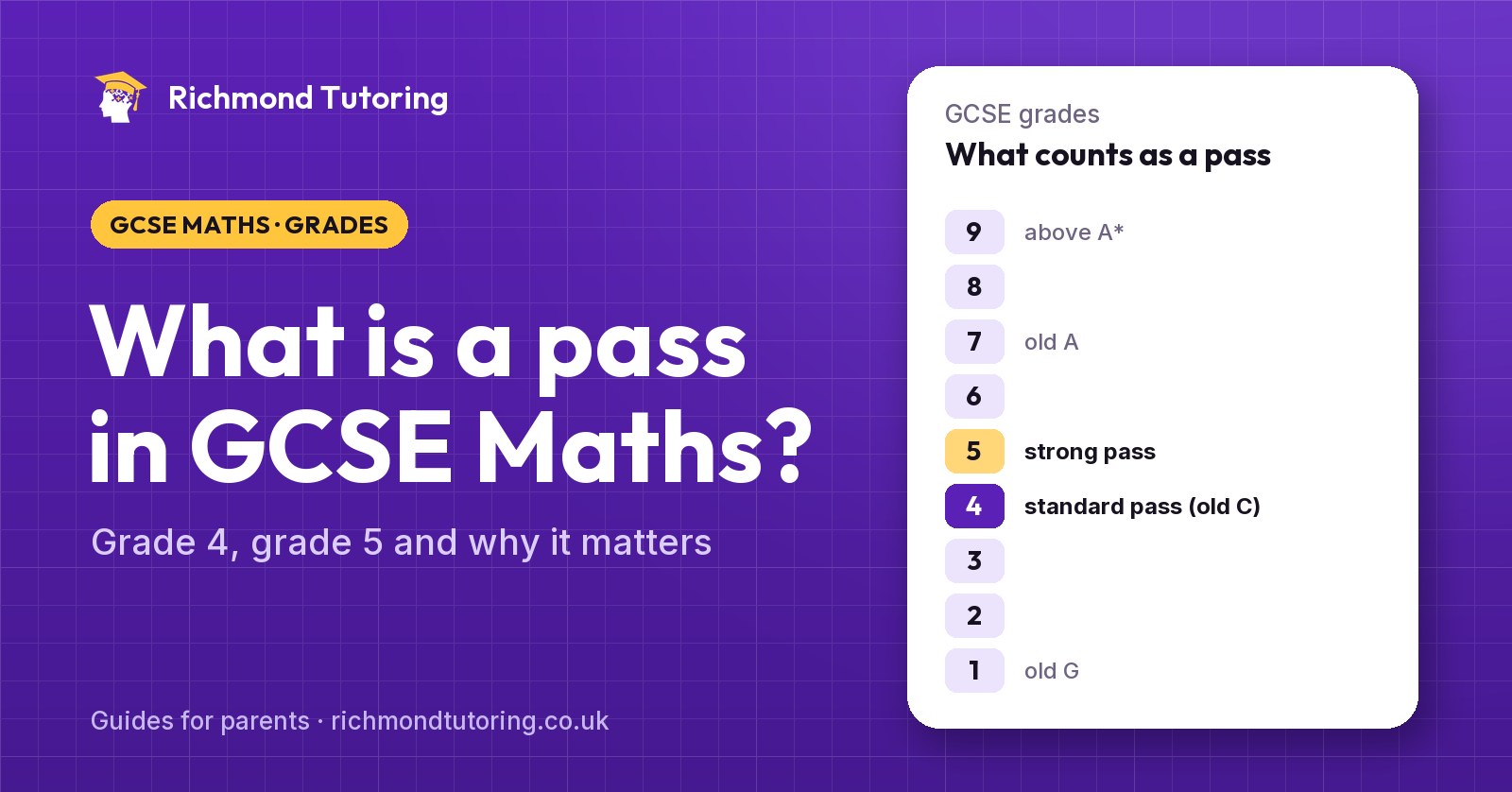
The short answer: GCSEs in England are graded 9 to 1. The Department for Education calls a grade 4 a "standard pass" and a grade 5 a "strong pass". A grade 4 is roughly the old grade C. Students who finish Year 11 without a grade 4 in maths have to keep studying it after 16.
The 9 to 1 grades, and the old letters
GCSEs moved from letters (A* to G) to numbers (9 to 1) in 2017, with maths among the first subjects to change. The two scales don't match grade for grade, but the Department for Education fixed three anchor points:
| New grade | Roughly the same as |
|---|---|
| 9 | Above the old A* |
| 7 | The bottom of the old A |
| 4 | The bottom of the old C |
| 1 | The bottom of the old G |
So a grade 4 sits where a low C used to be, and a grade 5 sits between a high C and a low B. A U (ungraded) means the student didn't reach grade 1 on Foundation, or grade 3 on Higher.
Standard pass or strong pass: which one counts?
Both are passes. The difference is who is asking.
- Grade 4, "standard pass". This is the grade that ends the requirement to keep studying maths after 16. It's also what most employers, apprenticeships and further education courses mean when they ask for "a pass in maths" or "a C or above".
- Grade 5, "strong pass". This is the measure used in school performance tables, so schools push hard for it. Many sixth forms ask for a 5 or 6 in maths before a student can start A-Levels, and more if the A-Levels use a lot of maths.
If a form asks for a grade C in maths, a grade 4 meets it.
How many marks is a pass?
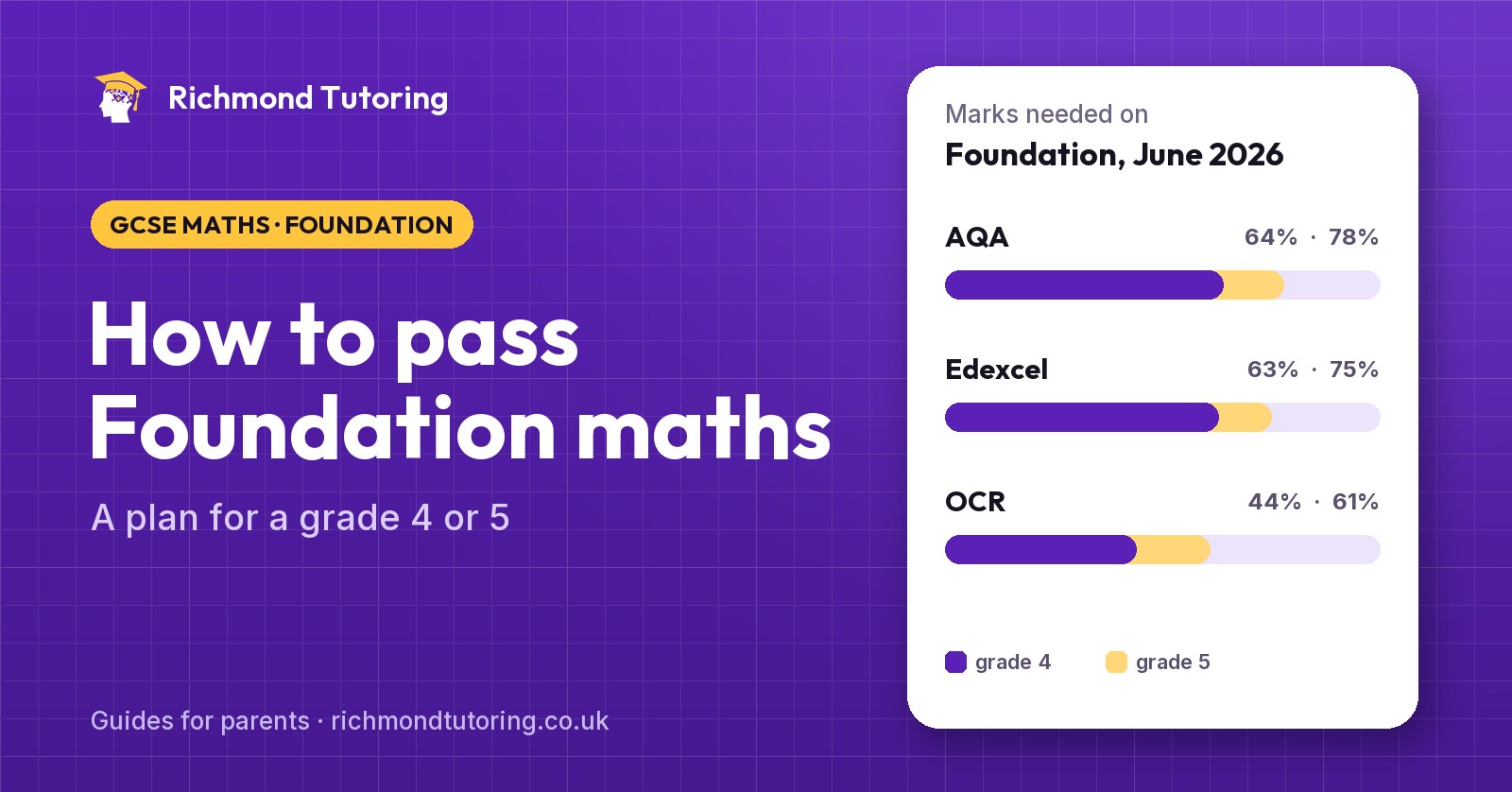
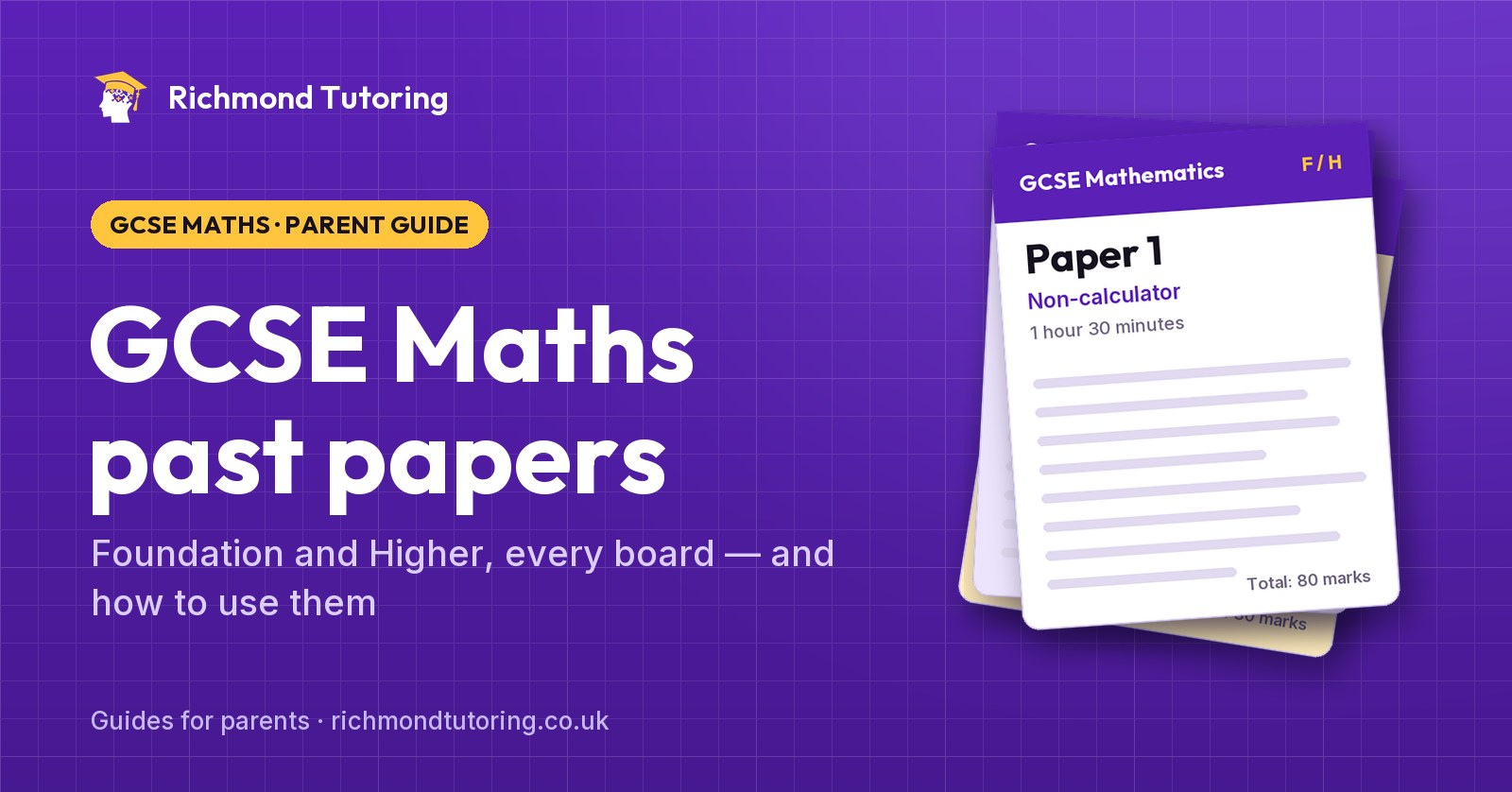
Every GCSE Maths student sits three papers. AQA and Pearson Edexcel papers are out of 80 marks each, so 240 in total. OCR papers are out of 100, so 300 in total. The marks needed for each grade (the grade boundaries) change a little each year. Here is what a pass took in June 2026:
| Board and tier | Grade 4 | Grade 5 |
|---|---|---|
| AQA Foundation | 154 of 240 (64%) | 187 of 240 (78%) |
| Pearson Edexcel Foundation | 151 of 240 (63%) | 181 of 240 (75%) |
| OCR Foundation | 133 of 300 (44%) | 183 of 300 (61%) |
| AQA Higher | 63 of 240 (26%) | 97 of 240 (40%) |
| Pearson Edexcel Higher | 50 of 240 (21%) | 82 of 240 (34%) |
| OCR Higher | 57 of 300 (19%) | 94 of 300 (31%) |
A pass takes a much smaller percentage on Higher, because the questions are much harder. It isn't an easier route. A Higher student who drops below grade 3 gets a U, whereas Foundation gives up to a grade 5 with more accessible questions. Our guide to Foundation vs Higher explains how to choose.
Want to know where a past paper score sits? Our free GCSE Maths grade calculator converts marks to grades on real boundaries from the last four years.
Why a pass in maths matters
GCSE Maths opens (or closes) more doors than almost any other GCSE.
- Sixth form and college. Most sixth forms want grade 4 or 5 in both maths and English for general entry. A-Level Maths usually needs a 6 or 7, and sciences, economics and psychology often ask for a 5 or 6 in maths.
- Apprenticeships and jobs. Many apprenticeships and employers ask for grade 4 in maths, or Functional Skills Maths Level 2 instead.
- University. Many degree courses ask for grade 4 or 5 in GCSE Maths alongside A-Levels. Teacher training, nursing and midwifery all need at least a grade 4.
- Staying in education. Without a grade 4, a student in England keeps studying maths after 16 (see below).
Requirements vary, so always check the specific sixth form, course or employer.
What happens if your child doesn't get a 4?
In England, students who finish Year 11 without a grade 4 in maths must keep studying it as part of their post-16 course:
- With a grade 3, they work towards GCSE Maths again.
- With a grade 2 or below, they can take Functional Skills Maths Level 2 or work towards the GCSE.
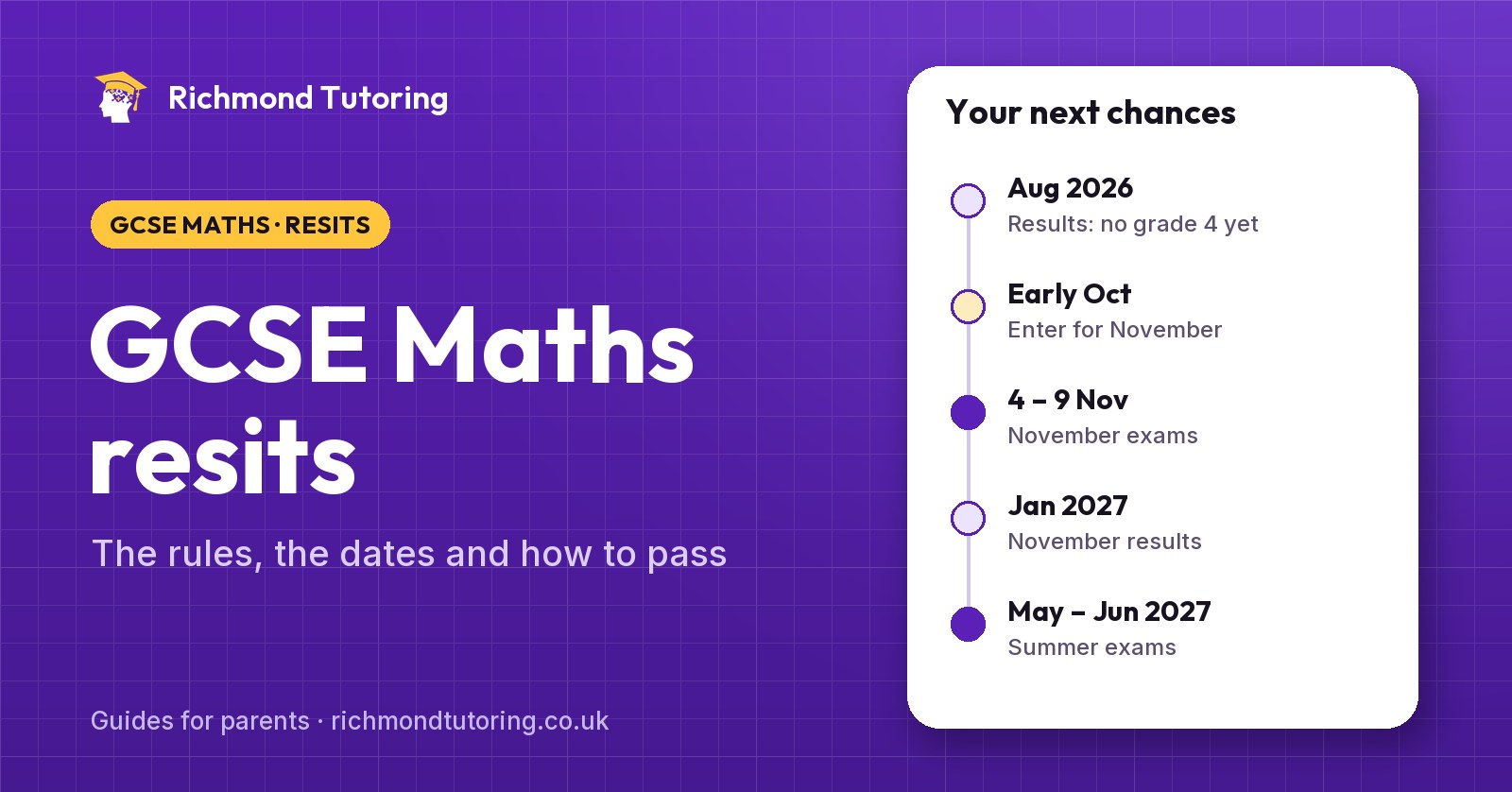
There are two chances each year to resit: November (for students aged 16 or over) and the main exams in May and June. Our GCSE Maths resit guide covers the rules, dates and what helps students pass second time round.
Want a second opinion? Book a free 45-minute demo class with a specialist tutor — no contract, and an honest view of what your child needs.
Book a free demo classHow to get from a 3 to a 4 (or a 4 to a 5)
The gap is usually smaller than it feels. On Foundation, a grade 3 to a grade 4 was about 40 marks across three papers in June 2026, roughly 13 marks a paper. Most of those come from:
- Securing number and ratio. Fractions, percentages, ratio and proportion make up about half of every Foundation paper.
- Showing working. Method marks are given for correct steps even when the final answer is wrong.
- Cutting careless errors on the early questions, where the marks are easiest.
- Timed practice with real past papers, marked strictly, then fixing the topics that lost marks.
Our step-by-step guide on how to pass GCSE Maths Foundation has the topic list and a 12-week plan. If you're not sure where your child stands now, the free GCSE Maths check gives an estimated grade and the topics to work on in about 25 minutes.
The bottom line
A grade 4 is a pass, and a grade 5 is a strong pass. The 4 is the grade that matters most: it ends the need to keep studying maths after 16 and meets most "C or above" requirements. Aim for a 5 or 6 if your child wants to go to sixth form, and a 7 if they're thinking about A-Level Maths. If a pass is in doubt, find the gaps early. A few specific topics and better exam technique are usually what stand between a 3 and a 4.