If your child has just missed a grade 4 in GCSE Maths, you are far from alone — and there is a clear route to putting it right. This guide explains the rules on resitting in England, the dates of the next exams, which tier to sit, and what actually helps students pass second time round.
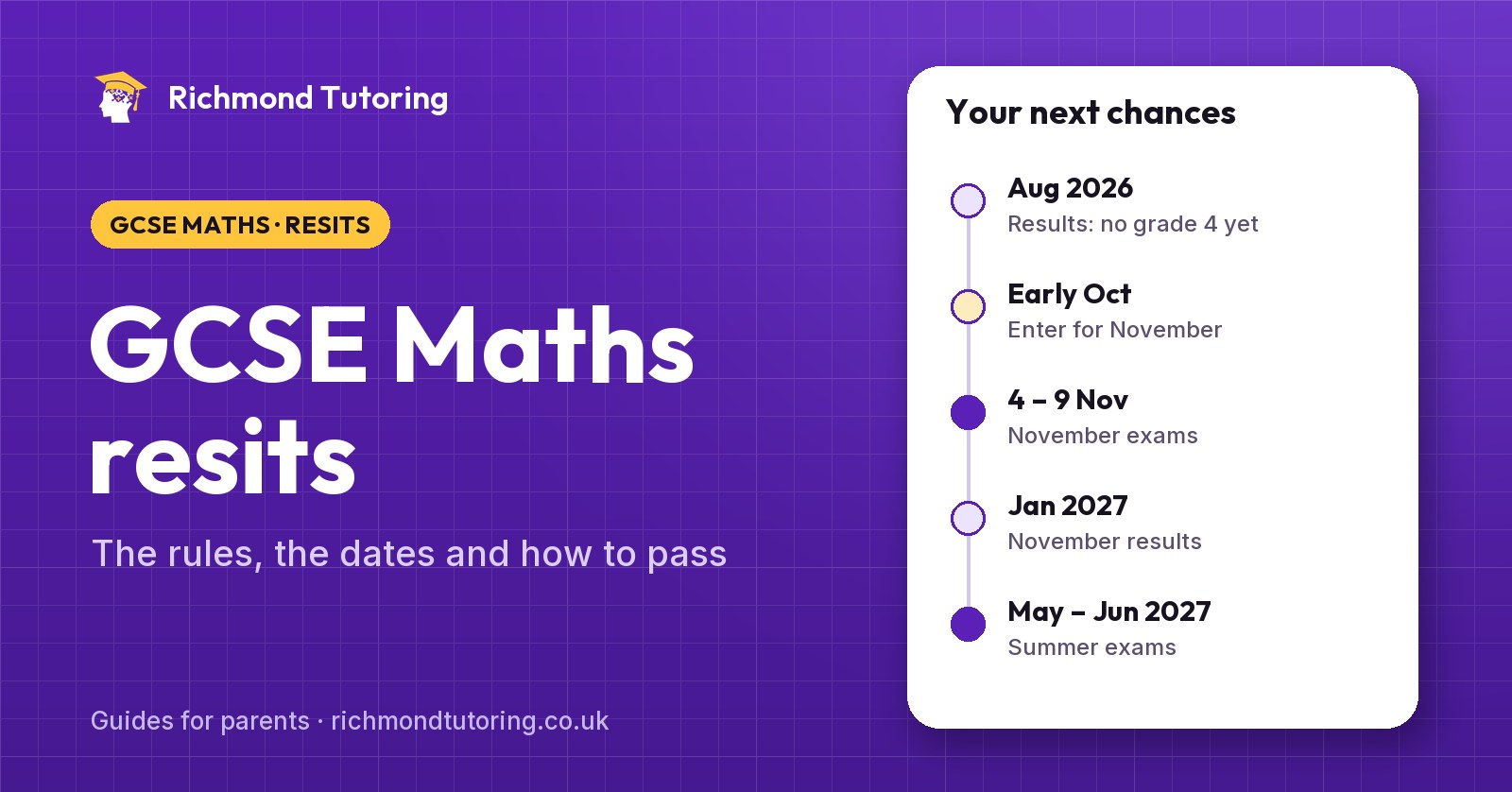
The short answer: students in England who finish Year 11 without a grade 4 in maths keep studying it after 16. With a grade 3, they work towards the GCSE again; with a grade 2 or below, they can take Functional Skills Level 2 instead. The next chances to sit the GCSE are the November 2026 series (entries close in early October; AQA's exams are on 4, 6 and 9 November) and the summer 2027 series in May and June.
Does your child have to resit GCSE Maths?
For most 16 to 18-year-olds in England, yes — they must carry on studying maths until they reach a grade 4. This is a rule for schools, colleges and training providers (known as the "condition of funding"), and it applies to students on full-time courses of study funded by the government, and to students up to 25 with an education, health and care plan.
What they study depends on the grade they got:
| Grade in GCSE Maths | What happens after 16 |
|---|---|
| Grade 4 or above | No need to continue maths (though many courses include it) |
| Grade 3 | Must work towards GCSE Maths again |
| Grade 2 or below | Can work towards Functional Skills Maths Level 2, or GCSE Maths |
Two points that often surprise parents:
- It is not a requirement to sit the exam at every opportunity. The rule is that students keep studying maths. The college decides when a student is ready to be entered.
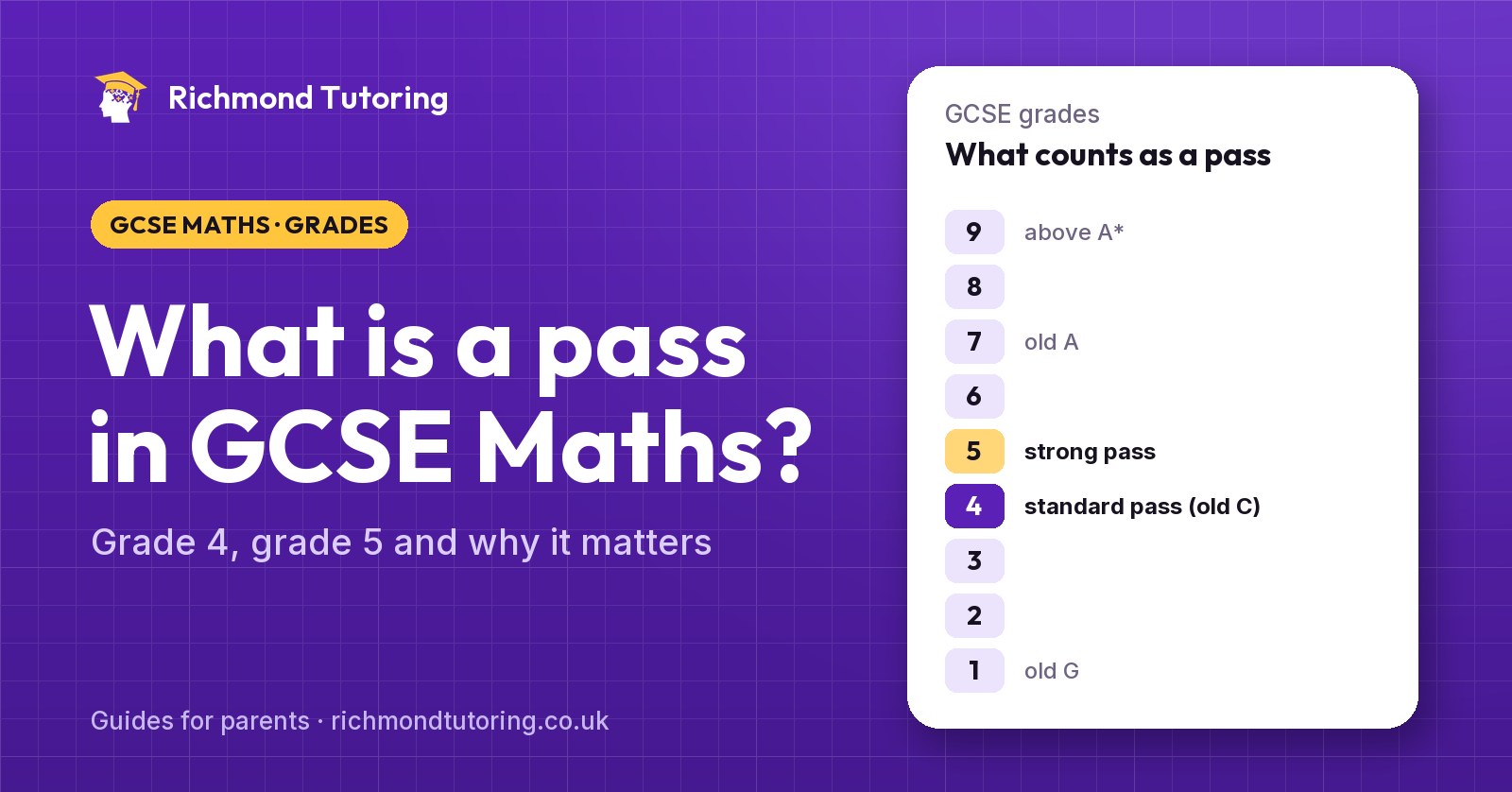
- A grade 4 is the target, not a grade 5. Once a student reaches a 4, the requirement ends.
When are the resits?
There are two chances each year.
The November series is for students aged 16 or over on 31 August of that year — in practice, anyone who has left Year 11.
- Entries close in early October (around 4 October for the November 2026 series). Schools and colleges often set an earlier internal deadline, so ask now.
- Exams: the three papers are sat in early November. For AQA in 2026, they are on Wednesday 4, Friday 6 and Monday 9 November, in the morning. Other boards' dates are very similar.
- Results are issued in January 2027.
The summer series takes place in May and June 2027, with results in August — the same exams Year 11 students sit.
November or June?
November suits students who were close. If your child missed grade 4 by a handful of marks and still remembers the course, a quick resit while it is fresh often makes sense. November also frees up the rest of the year for their other courses.
June suits students with bigger gaps. A student with a grade 2, or a low grade 3, usually needs months of steady work on the basics. Rushing into November can mean another disappointment.
The best way to decide is to find out how far off grade 4 your child was. Schools can tell you their marks, and you can check them against the grade boundaries with our grade calculator.
Foundation or Higher for a resit?
Most resit students sit Foundation tier. The aim is a grade 4 or 5, both of which are available on Foundation, and Foundation papers let students pick up far more of the marks.
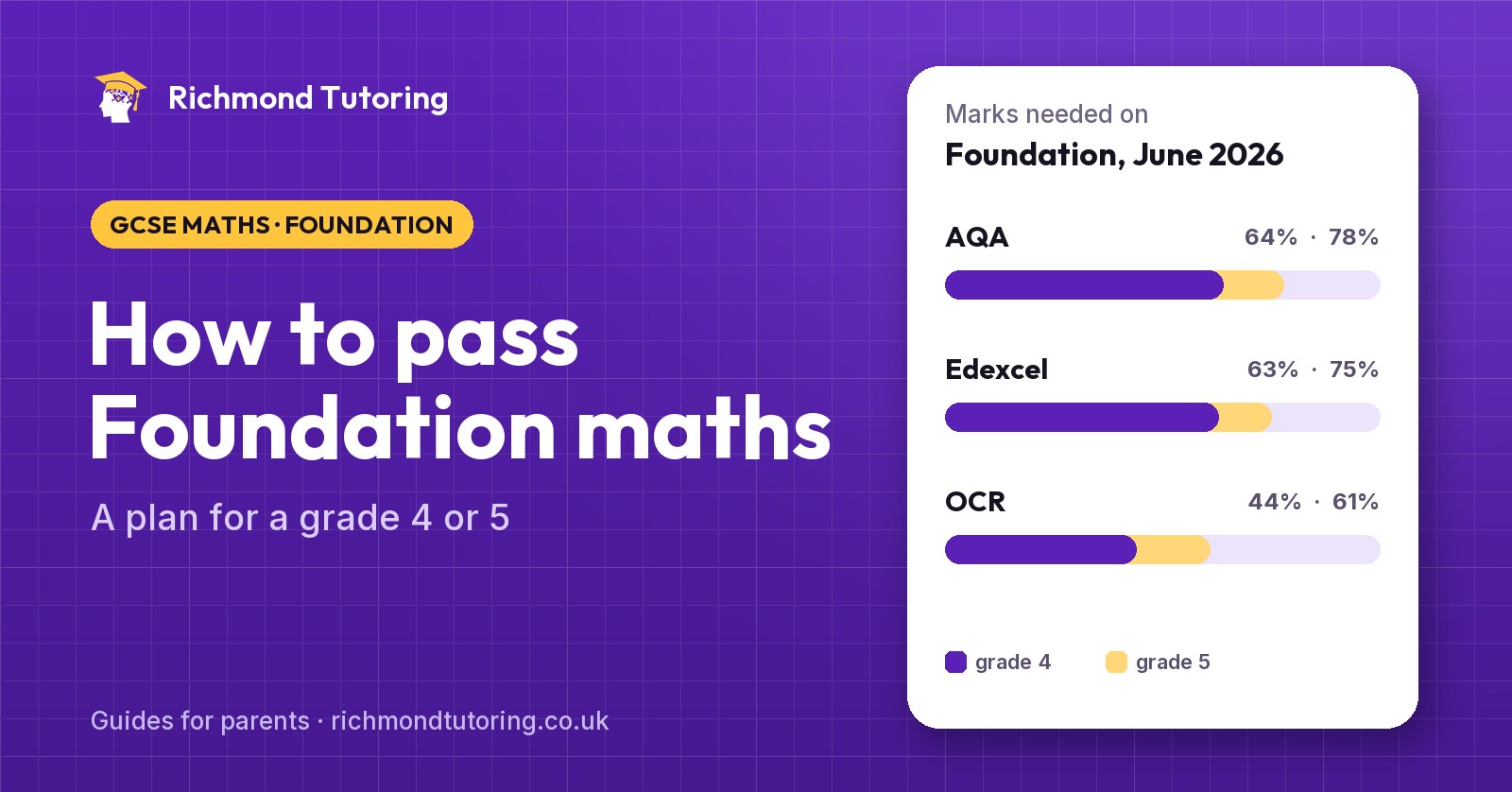
In the June 2026 exams, a grade 4 on Foundation needed between 44% (OCR) and 64% (AQA) of the total marks. On Higher, the percentage was lower, but the questions are much harder, and a student below grade 3 on Higher gets a U. Our guide to Foundation vs Higher explains the trade-off in detail.
Higher only makes sense for a resit if your child needs a grade 6 or above — for A-Level Maths or a science, for example — and is genuinely working at that level.
The honest numbers
Resitting is hard. In summer 2026, 15.3% of GCSE Maths entries from students aged 17 and over achieved a grade 4 or above, down from 17.1% in 2025. In other words, most students who resit do not pass at the next attempt.
That is not because they cannot. It is usually because a resit means sitting through the same lessons again, in a large class, alongside other courses — without anyone pinpointing exactly which marks were lost first time. The students who pass tend to have three things: a precise picture of their gaps, focused practice on those gaps, and plenty of timed papers.
How to pass the resit
- Find out the marks, not just the grade. Ask the school or college for the marks on each paper. Five marks short of a grade 4 is a very different job from fifty.
- Diagnose the gaps. Sit a recent full set of Foundation papers and mark it, or send it to us for a free paper analysis. The aim is a list of topics, not a grade.
- Start with the topics worth the most marks. On Foundation, number and ratio — fractions, percentages, ratio, proportion — make up about half of the paper. Secure those before anything else.
- Collect method marks. Many resit students lose marks by writing only an answer. Showing each step earns marks even when the final answer is wrong.
- Practise under time pressure. In the last month, sit at least one timed paper a week and mark it the same day.
- Little and often. Four half-hour sessions a week are worth more than one long session on a Sunday.
Our guide on how to pass GCSE Maths Foundation has the full list of high-value topics and a week-by-week plan.
Want a second opinion? Book a free 45-minute demo class with a specialist tutor — no contract, and an honest view of what your child needs.
Book a free demo classResitting as an adult
There is no age limit and no limit on the number of attempts. Adults (and anyone not in education) can sit GCSE Maths as a private candidate at an exam centre — many schools, colleges and specialist centres accept private candidates, and they set their own fees. Contact a centre well before the entry deadline, because places and access arrangements need time to organise.
For some jobs and courses, Functional Skills Maths Level 2 is accepted instead of a GCSE grade 4. Check with the employer or course first, as not all accept it.
The bottom line
A grade 3 in GCSE Maths is not the end of the road — it is usually a gap of a few specific topics and some exam technique. Find out exactly where the marks were lost, fix those topics first, and practise with timed papers. With the right help, most students can turn a 3 into a 4.